



INFANT TONGUE TIES
Infant Tongue Tie Symptoms and Treatments
Infant lip tie and
infant tongue tie
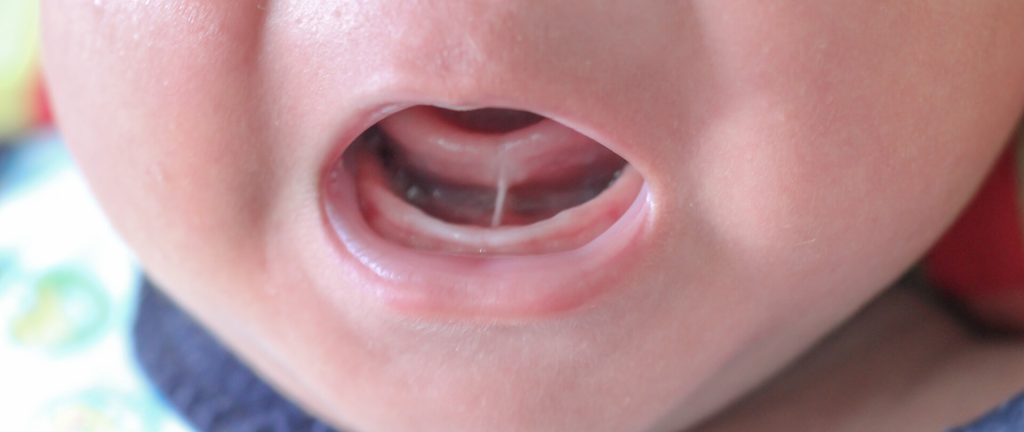
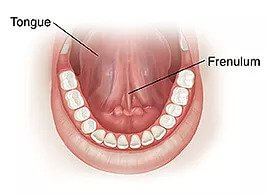
INFANT TONGUE TIE (LINGUAL FRENULUM)
Tongue tie, commonly referred to as Ankyloglossia, is a string of tissue called frenulum. This frenulum connects the underside of the tongue to the mouth’s floor and can be seen under the tongue through a mirror. The frenulum tissue can restrict the movements of the tongue and cause problems during Breastfeeding, Sucking, Swallowing, Eating and Chewing, Drinking, Breathing, Speech, Jaw growth, Posture and Digestion.
INFANT LIP TIE (LABIAL FRENULUM)
Infant lip ties are a similar band of tissue called the labial frenulum that adheres the lip to the gums at a level much higher than normal. This can lead to potential breastfeeding issues, a gap in between upper front teeth, cavities, inability to close the lips without strain, and speech difficulties.

BABY TONGUE TIE CAUSES
While there are various theories and research behind it, the exact causes of tongue ties are not known yet. Researchers suggest that the tongue tie may be hereditary or due to a defect in cellular apoptosis. Additionally, boys have been found to be more susceptible to having a tongue tie.
INFANT TONGUE TIE SYMPTOMS
Breastfeeding in infants is essential not only for weight gain but also for developed tongue function for the correct functioning of the jaw. Unsuccessful breastfeeding is often stressful for the mother and may affect her mental health. Unsuccessful breastfeeding may prompt the mother to use supplement bottles under the notion that she’s not producing enough milk. However, in certain cases, this may not be true. At times, there may be dysfunctions with the baby’s soft tissues that can be easily resolved. A failure to diagnose tongue and lip ties supplemented with bottle feeds affects jaw growth, airway development, and much more.
For mothers having trouble breastfeeding, it would be ideal to meet with a pediatric dentist, lactation consultant, or pediatrician who can rule out lactation concerns and then assess if there is any tongue or lip tie that is hindering the process of breastfeeding. A comprehensive team-based approach is key to treating these patients. At TMJ, Tongue Tie & Sleep Institute, we also believe in helping a mother through their exhausting breastfeeding journey with emotional and psychological support.
Symptoms in breastfeeding mothers indicating baby tongue tie includes the following,
- Creased nipples
- Blanched nipples
- Bleeding nipples
- Painful latching
- Incomplete breast drainage after feeding
- Mastitis / Infected nipples
- Nipple Thrush
- Reduced milk supply
- State of mind: Anxious / Depressed
The various baby tongue tie symptoms to watch out for includes
the following,
- Prolonged latching / long feeding hours
- Unsettled after feeding
- Short sleep duration
- Poor / shallow latch
- Chewing on nipples
- Reflux symptoms
- Colic symptoms / Gassiness
- Falls asleep during feeds
- Pulls body away from breast while feeding
INFANT TONGUE TIE DIAGNOSIS
In many cases, infant tongue tie is found when determining the cause of breastfeeding problems in the baby. A tongue tie cannot be diagnosed by seeing if the newborn can stick out the tongue outside the mouth. The evidence-based current approach shows that a comprehensive functional assessment of the tongue is essential. For accurate infant tongue tie diagnosis, it is essential to see a tongue tie specialist. This is also important because apart from the appearance of the tongue, various other tongue tie symptoms can be assessed only by a trained tongue tie specialist.
INFANT ANKYLOGLOSSIA TREATMENT
A tongue tie specialist determines the right infant/newborn tongue tie treatment after considering several factors, such as,
- The baby’s history
- Clinical examination
- The severity of the condition
In severe cases, a frenotomy is advised. It can be performed using a scissor or laser technique. The Laser Frenectomy is a safe, quick, simple, and painless procedure that generally requires no anesthesia. Oral Myofunctional Therapy is given as an adjunct to rehabilitate the tongue function and avoid any relapses. In some infants, Craniosacral Therapy may be used as an adjunct when some asymmetry in the head shape or problems with neck stabilization and body tightness have been observed. Postoperative stretches, a functional release, and a team approach is the key to a successful frenotomy. This is what sets us apart. For those seeking tongue tie treatment near me, you have come to the right place.

Dr. Shah is
Laser Certified
(GLOH), LLC to perform laser
frenectomies.
RISKS OF AN UNTREATED TIE
- Selective in chewing solid foods
- Speech defects
- Improper jaw growth
- Crooked teeth
- Sucking habits
- Mouth breathing
- Forward neck and shoulder posture
- Long term bed wetting
- Hyperactivity / Lack of attention (ADD, ADHD)
- Snoring / Noisy breathing
- Frequent nasal allergies and throat infections
- Teeth grinding
- Picky eating / Slow eating
The above mentioned risks are examples of observed changes in children. NOT ALL TIES SHOW all the above mentioned risks. It takes an experienced provider to thoroughly investigate the tongue function and symptoms associated with each tie.
TONGUE TIE RELEASE: AN AGE OLD TREATMENT
Until this 19th century Midwives were known to clip a newborn’s tongue-tie at birth with a sharp fingernail if spotted with breastfeeding issues. The second half of the 20th century saw a movement away from the practice of breastfeeding. It may have been caused by the rise of formula and bottle feeding, which together, made diagnosing a tongue tie as a long-lost art.
That means there are two to three generations that grew up with tongue-ties. It’s a large group of adults who are living in the dark and are experiencing its signs and symptoms that could unknowingly have a tongue-tie and its compensations.
OUR ADVANCED & GLOBALLY RENOWNED TONGUE TIE PROCEDURES:
Frequently Asked Questions
Infant tongue tie surgery is quick and mostly painless, with only mild discomfort. Gentle feeding helps babies recover within a day or two.
The best time for infant tongue tie surgery is in the first few weeks or months, but it can be safely done later if needed.
Infant tongue tie surgery is recommended when tongue restriction affects feeding, weight gain, or speech, as evaluated by a pediatrician or ENT specialist.
Recovery from infant tongue tie surgery is fast; most babies feed within hours and soreness resolves in 1–2 days, aided by gentle tongue exercises.
Not all babies need infant tongue tie surgery. Mild cases may improve naturally, so consulting a specialist ensures it’s truly necessary.
A newborn tongue tie surgery is a quick, gentle procedure causing minimal discomfort. Babies often cry briefly, and breastfeeding can resume comfortably right after.
Recovery from a newborn tongue tie surgery is usually fast, often within 2–3 days, with improved feeding. Simple tongue exercises may be recommended to prevent tissue reattachment.
A newborn tongue tie surgery is needed only if tongue restriction affects breastfeeding, latching, or weight gain. Pediatricians may suggest it for better oral function.
The best time for a newborn tongue tie surgery is within the first few weeks, ensuring efficient feeding and reducing future speech or dental issues. It can be done later if required.
Some pediatricians may wait as mild cases can improve naturally, but when tongue restriction impacts feeding or oral development, newborn tongue tie surgery is recommended for long-term benefits.
Frequently Asked Questions
If your infant has tongue tie, you may notice the following while breastfeeding,
- Trouble latching
- Clicking sounds while feeding
- Trouble maintaining a latch
- Frequent feeds
- Poor weight gain
No, infant tongue tie release is not painful. Before the procedure, a numbing cream or solution is used for a painless procedure. Dr. Ankita Shah offers painless tongue tie release procedures. Her approach ensures minimal to no pain both during and after the procedure.
No, with Dr. Ankita Shah’s laser treatment approach, you can expect minimal to no scarring post-procedure. Dr. Ankita Shah is the only doctor who is Laser Certified by Global Laser Oral Health (GLOH), LLC, to perform laser frenectomies.
Blogs

The Link Between Tongue Tie and Gastroesophageal Reflux Disease (GERD)
I frequently meet patients who share a common concern: the question of whether their jaw pain,

What Happens If I Don’t Treat My Child’s Tongue-Tie?
As a parent, your child’s health and development are your top priorities. But what if something..

How Do Babies Feed After Tongue-Tie Surgery? A Complete Guide for Parents
When your baby struggles to breastfeed or bottle-feed, it can be very frustrating and emotional

How Tongue Tie Impacts Nutrition and Feeding in Children?
Have you ever noticed your baby struggling to latch while breastfeeding? Or maybe your child..

How Laser Frenectomy Helps Improve Breastfeeding for Newborns?
Breastfeeding is a beautiful and essential bonding experience between a mother and her newborn.

Innovative Advances in Tongue Tie Treatment: What’s New?
A condition known as tongue-tie, or ankyloglossia, limits the range of motion of the tongue.

How Tongue Tie Affects Speech Development in Children and Adults?
Tongue tie, also called ankyloglossia, may seem like a technical word, many adults and parents should..

Tongue Tie Compensations: Fascial Restrictions, Tension And Pain
Fascia is a connective tissue more like a spider web that provides our body a continuous 3-dimensional

6 Steps Of Assessment: Do I Have A Tongue Tie?
The back of the tongue should be resting high up on the palate. This helps in keeping the airway wide open.

What Exactly Is A Tongue Tie? How Does It Affect Us?
#DidYouKnow the tongue has 8 muscles which can exert 500gms of force? We have almost always neglected