






Patients with temporomandibular disorders (TMD) often report symptoms beyond jaw pain, including headaches, dizziness, facial discomfort, and ear-related issues. These symptoms may appear unrelated but are frequently interconnected through the trigeminal nerve system.
TMJ disorders are primarily mechanical conditions involving the jaw joint and surrounding muscles. However, due to their close relationship with neural pathways, they can produce significant neurological symptoms. This means TMJ is not purely a neurological disease, but it has important neurological involvement.
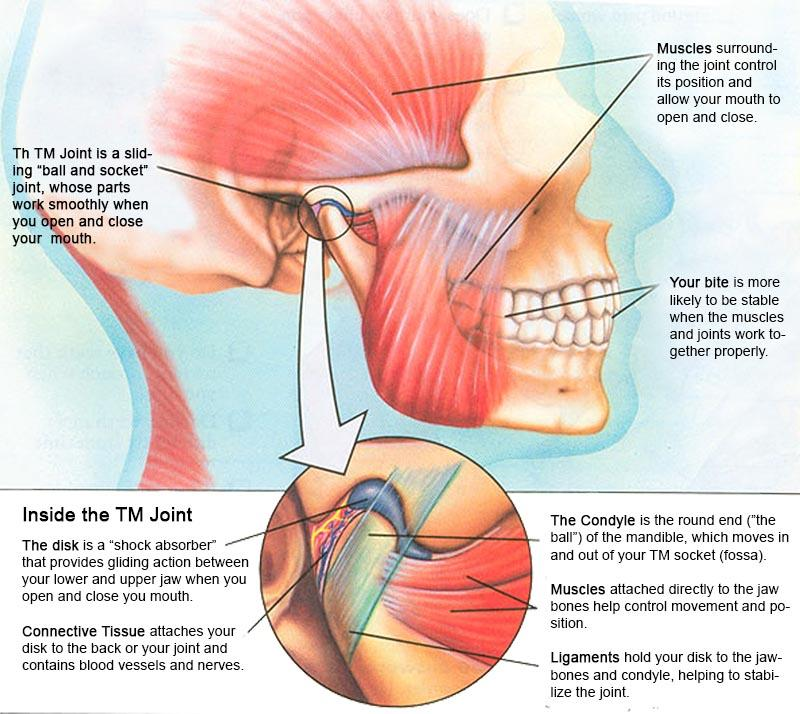
The temporomandibular joint is a complex structure involving bone, cartilage, muscles, and nerves working together.
The trigeminal nerve, the fifth cranial nerve, provides sensation to the face, jaw, teeth, and oral structures and controls the muscles responsible for chewing.
The TMJ is innervated by three key branches:
When the joint becomes unstable, inflamed, or misaligned, these nerves may become irritated or sensitized, leading to symptoms that extend beyond the joint itself.
Nerve Irritation and Mechanical Stress
When joint stability is lost, abnormal mechanical loading and inflammation develop within the joint. This can sensitize nearby nerve endings and increase pain signaling
Central Sensitization
Chronic TMJ dysfunction may increase the sensitivity of the nervous system. As a result, normal activities such as chewing or speaking may feel uncomfortable or painful.
Trigeminal Nerve Hyperactivity
Irritation of the trigeminal nerve can lead to:
These symptoms reflect altered nerve signaling rather than a primary neurological disease.
TMJ and Common Neurological Symptoms
| Feature | Comparison |
| Cause | TMJ Disorder: Mechanical joint dysfunction Trigeminal Neuralgia: Primary nerve disorder |
| Pain Type | TMJ Disorder: Dull, aching, pressure Trigeminal Neuralgia: Sharp, electric, shock-like |
| Location | TMJ Disorder: Jaw, temples, neck Trigeminal Neuralgia: Along trigeminal nerve pathway (face) |
| Nature of Pain | TMJ Disorder: Ongoing or recurring Trigeminal Neuralgia: Sudden, brief, episodic attacks |
Many individuals with TMJ disorders experience headaches. Muscle overactivity in the jaw increases tension in the temples and neck, while trigeminal nerve irritation amplifies pain signals.
Postural imbalance, especially forward head posture, further increases strain on the jaw and cervical spine, contributing to persistent headaches.
Dizziness and Balance Issues
The TMJ is located close to the inner ear, which plays a key role in balance. Joint inflammation or instability may influence nearby structures or shared neural pathways, leading to dizziness in some patients.
Ear Pain and Tinnitus
Ear symptoms are common in TMJ disorders. The trigeminal nerve supplies areas around the ear, which explains why patients may experience ear pain or ringing without infection.
Facial Pain and Sensory Changes
Nerve irritation may lead to:
These symptoms occur due to altered nerve function rather than isolated joint pain
TMJ dysfunction is closely linked to posture. Jaw instability affects muscle coordination in the neck and upper spine, while poor posture increases mechanical load on the joint.
This creates a feedback loop:
Jaw instability → muscle imbalance → postural strain → increased joint stress
As a result, TMJ is best understood as a neuromuscular condition, not just a localized joint issue.
TMJ disorder and trigeminal neuralgia are different conditions.
While they may share symptoms, their underlying causes differ.
Diagnosis goes beyond identifying jaw pain and includes:
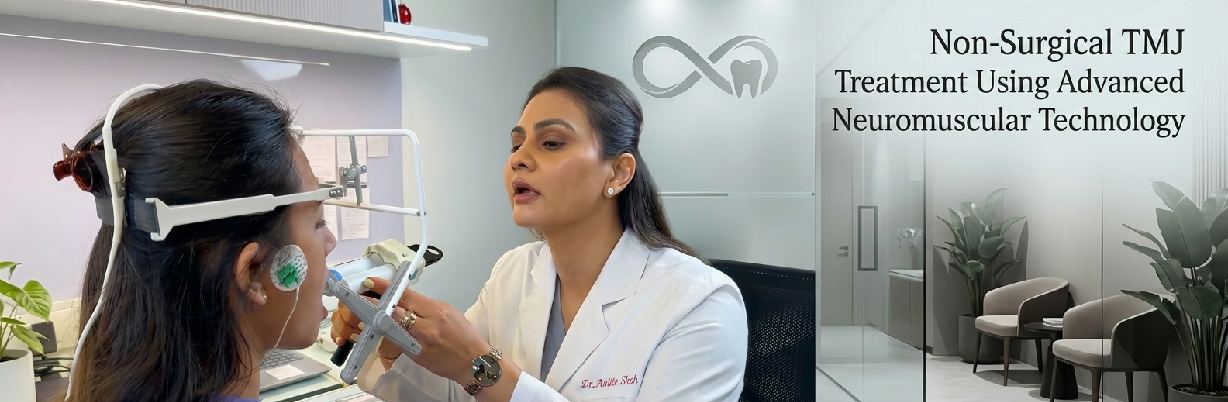
Advanced tools may include:
This comprehensive evaluation helps determine whether symptoms are primarily mechanical, neuromuscular, or involve nerve sensitization.
TMJ is managed as a system involving joints, muscles, and nerves.
Treatment focuses on:
A Gnathoneuromuscular (GNM) approach evaluates real-time muscle and joint function and identifies the jaw’s optimal resting position. This allows treatment to be guided by function rather than static bite alone.
Myofunctional therapy may be included to retrain tongue posture, muscle coordination, and airway function, supporting long-term stability.
TMJ disorder is primarily a mechanical joint condition with significant neurological implications. Because of its close relationship with the trigeminal nerve and surrounding musculature, dysfunction in the jaw can produce symptoms beyond local pain.
Understanding TMJ as a neuromuscular condition allows for more accurate diagnosis and structured treatment. Early evaluation helps reduce the risk of chronic nerve sensitization and supports long-term functional stability.
TMJ is not primarily a nerve disorder, but it involves nerves and can produce neurological symptoms.
Yes, due to its proximity to the inner ear and shared neural pathways
Symptoms such as burning pain, tingling, numbness, or persistent headaches may indicate nerve involvement.
Yes, when joint stability improves and inflammation reduces, nerve irritation often decreases.
If jaw pain persists or is associated with headaches, dizziness, ear symptoms, or facial discomfort.
Copyright ©2025 TMJ, Tongue Tie and Sleep Institute. All Rights Reserved.
WhatsApp us
Let Us Know How Can We Help You!
At our institute, we take pride in providing complete care for issues related to tongue tie and TMJ. To enhance your quality of life, we treat a range of ailments with state-of-the-art technology and expert care. If you’re searching for an effective tongue-tie operation option or a TMJ specialist in India, you have arrived at the right place.
A tongue tie operation or tongue tie surgery is a life-changing procedure that not only restores tongue mobility but also has a full body effect. While most people associate tongue tie with breastfeeding difficulties in infants, it can also affect speech, breathing, posture, dental health, and sleep patterns in older children and adults. By undergoing this minimally invasive fascia release procedure, patients often experience immediate improvements in functionality and overall well-being.
For individuals considering tongue tie surgery, the benefits are far-reaching:
The Temporomandibular Joint (TMJ) that is your Jaw Joint has a significant impact on one’s quality of life, as they leave the person feeling exhausted and irritable. It not only affects essential functions like chewing, speaking, yawning but also affects one’s posture, breathing and sleep. As a leading TMJ specialist in Mumbai, we offer comprehensive diagnostics and personalized treatment plans to address your unique needs.
Our approach to TMJ disorders combines state-of-the-art technology with evidence-based practices. We specialize in:
Many patients are unaware that tongue tie and TMJ disorders can also be interconnected. A restricted tongue can lead to compensatory behaviors that strain the jaw, progressing towards TMJ issues.
For newborns, a tongue tie operation is critical in supporting breastfeeding. Infants struggling to latch or feed effectively benefit greatly from a quick and safe procedure.
Adults often seek tongue tie operations for relief from symptoms such as speech impediments, TMJ pain, or even snoring. Combining tongue tie surgery with myofunctional therapy ensures optimal results.
An integral part of our treatment protocols is myofunctional therapy. Exercises used in this therapy help to strengthen and coordinate the muscles of the tongue and face. Whether you’re undergoing a tongue tie operation or being treated for TMJ issues, myofunctional therapy plays a pivotal role in ensuring lasting outcomes. Expertise and complete treatment are essential for treating TMJ issues or tongue tie. Whether you’re searching for the best tongue tie surgery options or a trusted TMJ specialist in Mumbai, we ensure personalized care and transformative results. Don’t let these conditions stop you—reach out to us today to book your consultation and start your journey toward better health and wellness.