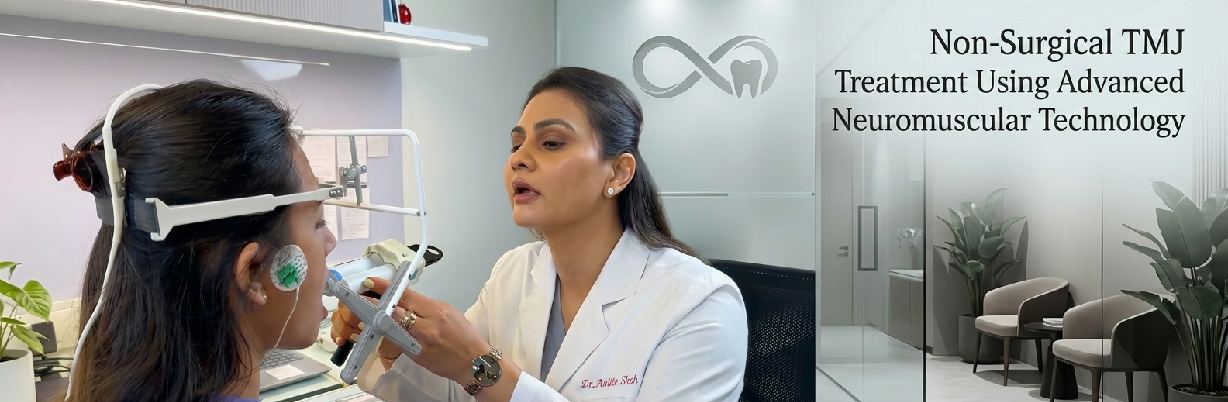







As a TMJ and airway specialist in Mumbai, one of the most common concerns parents bring to me is this: “My child is always tired, snores at night, or breathes through the mouth, is something wrong?”
My answer is almost always the same: yes, something is likely going on, and we need to look deeper than just the tonsils.
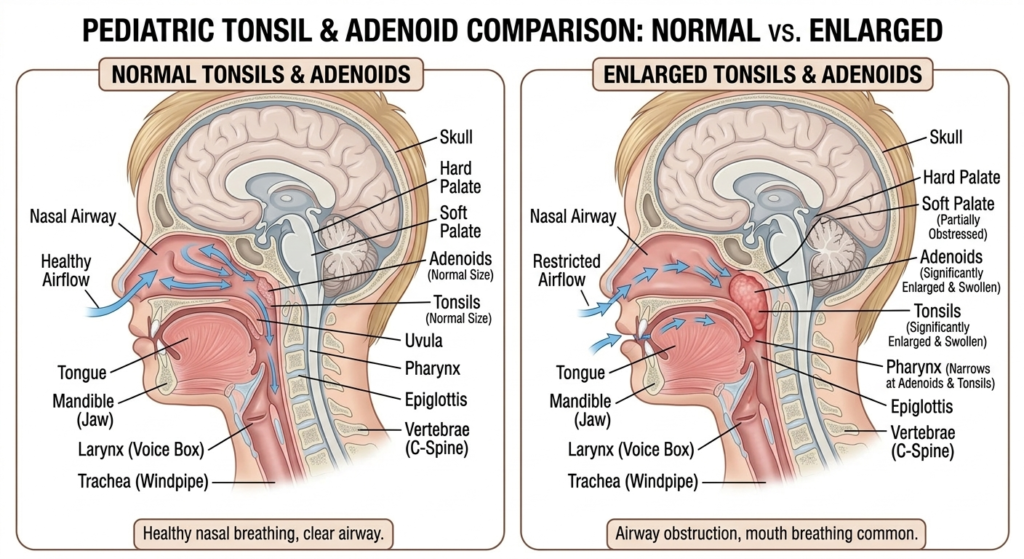
If your child has been told they have enlarged tonsils and adenoids are often a sign that something deeper is affecting the airway. In many children, the enlargement develops as a response to restricted nasal breathing, narrow jaw structure, poor tongue posture, or other airway limitations.
That is why treatment must focus not only on the tonsils themselves, but also on identifying and correcting the root cause of the breathing problem.
simply removing them may not always be the full solution to your child’s breathing problem.
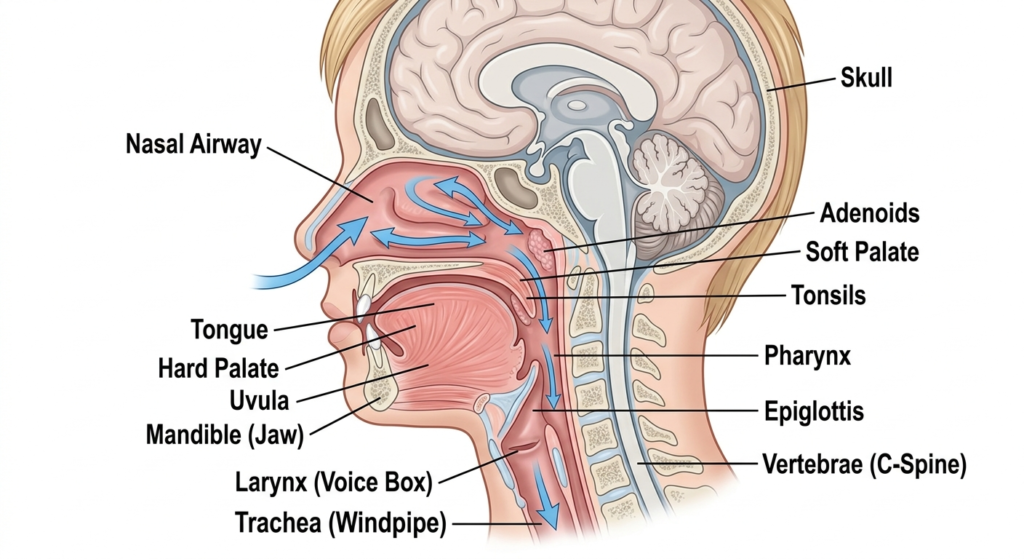
Tonsils and adenoids are small pieces of lymphatic tissue that help your child’s immune system fight infections. They are most active during early childhood. However, in some children, they become chronically enlarged and this can block the airway, making it hard to breathe through the nose.
Here is something I always stress with parents: enlarged tonsils and adenoids are often a symptom, not the disease itself. They may be reacting to allergies, chronic infections, environmental irritants, or even structural issues in the jaw and nasal passage. Identifying the root cause is crucial if we want long-term improvement, not just short-term relief.
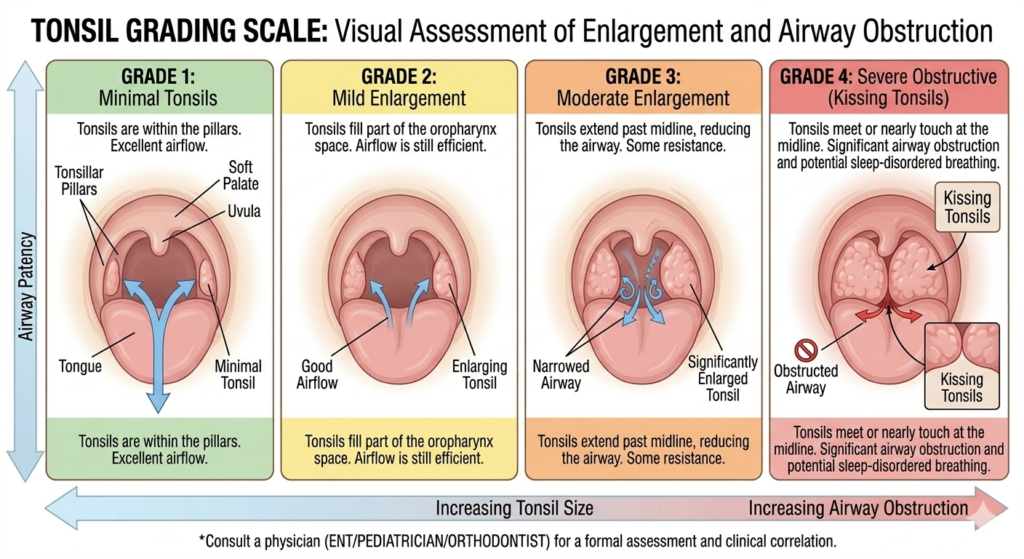
In clinical practice, we assess the size of the tonsils using a grading system from Grade 1 to Grade 4. This helps us understand how much of the airway is affected and what level of intervention may be needed.
| Grade | What it means | Breathing impact | Airway orthodontics needed? |
| Grade 1 | Tonsils barely visible, within pillars | Minimal | Rarely,monitor only |
| Grade 2 | Tonsils visible but within pillars | Mild ,mouth breathing possible | Sometimes, evaluate jaw width |
| Grade 3 | Tonsils extend beyond pillars | Moderate, frequent snoring, disrupted sleep | Often jaw expansion may help |
| Grade 4 | Tonsils nearly touching | Severe, significant airway blockage | Almost always, comprehensive evaluation needed |
As you can see, the grade of tonsil enlargement gives us important information, but it is only one part of the picture. This is where airway orthodontics becomes essential.
Many parents come to me after their child has already had a tonsillectomy or adenoidectomy, yet the child is still snoring, mouth breathing, or waking up tired. This is more common than you may think.
Simply removing the tonsils does not always solve breathing problems , especially if there is an underlying structural issue with the jaw, tongue, or nasal airway that was never addressed. The tonsils may have been enlarged partly because the body was compensating for a narrow airway. Once they are removed, that narrow jaw or restricted tongue is still there.
This is why I always recommend a comprehensive airway evaluation before or alongside any decision about surgical removal.
In my practice, when a child comes in with breathing difficulties, I do not just look at the throat. A complete airway orthodontic evaluation involves assessing multiple interconnected structures:
| What we assess | Why it matters | Possible treatment |
| Jaw Width | A narrow jaw reduces nasal airway space and forces mouth breathing | Jaw expansion (palate expander) |
| Jaw Position | A jaw that sits too far back restricts the airway at the throat | Forward jaw development (functional appliances) |
| Tongue Function | A low or restricted tongue can push on teeth and block airflow | Tongue tie release, myofunctional therapy |
| Lip Posture | Open mouth resting posture signals airway compromise | Myofunctional therapy, lip exercises |
| Head Shape | Skull and facial growth patterns influence jaw development and airway size | Early interceptive orthodontic guidance |
| Muscle Tone | Low muscle tone prevents the tongue from resting on the roof of the mouth and makes it difficult to achieve a lip seal | Myofunctional therapy, Craniosacral Therapy, Occupational Therapy |
1. Jaw Expansion for Nasal Breathing
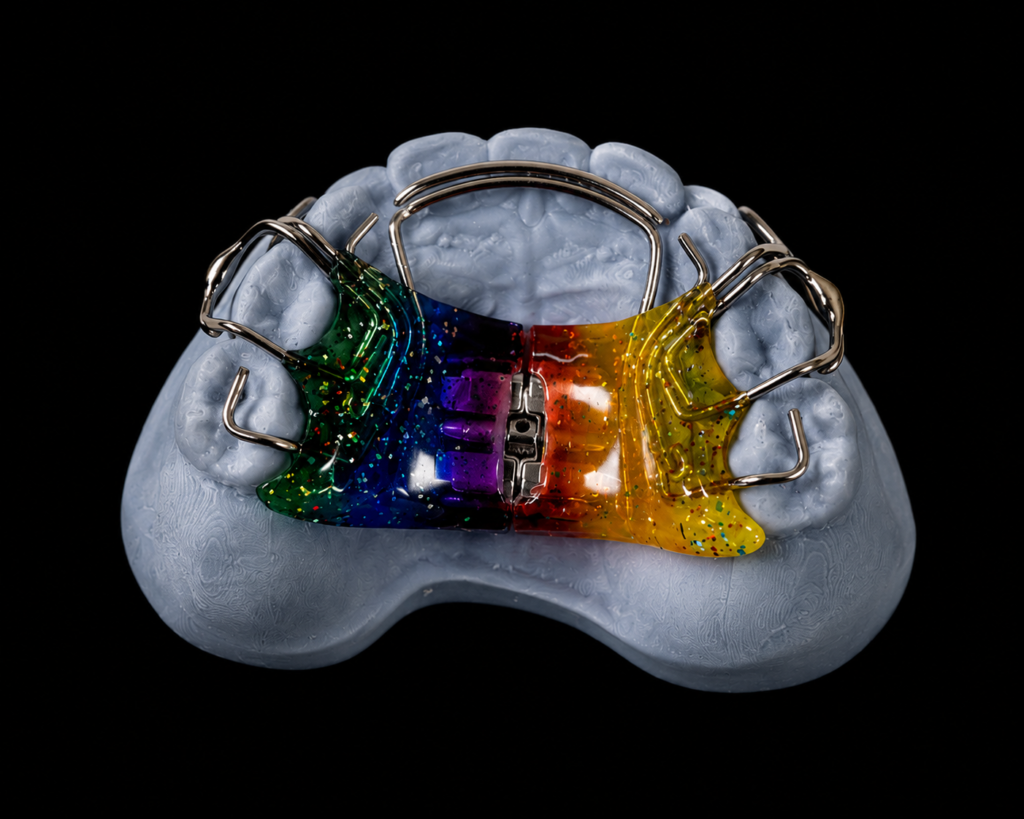
One of the most powerful tools in airway orthodontics is jaw expansion. When a child has a narrow upper jaw, the nasal floor, which sits right above it, is also narrow. This reduces nasal airway volume and forces mouth breathing.
By using a palate expander, we can widen the upper jaw and significantly improve nasal breathing. I have seen remarkable changes in children’s sleep, energy levels, and even focus at school after this treatment, without any surgery.
2. Forward Jaw Development
Some children have a jaw that sits too far back, a condition we sometimes call a retruded mandible. When the lower jaw is positioned backward, it pulls the tongue and soft tissues of the throat backward too, narrowing the airway from behind. In these cases, forward jaw development using functional appliances can help bring the jaw forward and open up the airway naturally.
3. Tongue Tie Release
Tongue tie is more common than many parents realise and can significantly affect tongue posture and airway stability.. When the tongue is restricted and cannot rest on the roof of the mouth, it often falls back and narrows the airway, especially during sleep. If tongue tie is present and contributing to breathing problems, a tongue tie release (frenectomy) can help improve tongue function and airway patency significantly.
4. Myofunctional Therapy
If the structural assessment is normal, meaning there is no narrow jaw, no backward jaw position, and no tongue tie, but the child is still mouth breathing or has poor tongue posture, myofunctional therapy This is a programme of exercises that retrains the tongue, lips, and facial muscles to function correctly.
Even when tonsils or adenoids are removed, some children may continue mouth breathing if the habit has already become established. Myofunctional therapy helps retrain these breathing patterns by teaching the tongue and facial muscles to support proper nasal breathing.
In many cases, it works as a powerful complement to orthodontic treatment, and in milder cases it may even serve as the primary treatment approach.
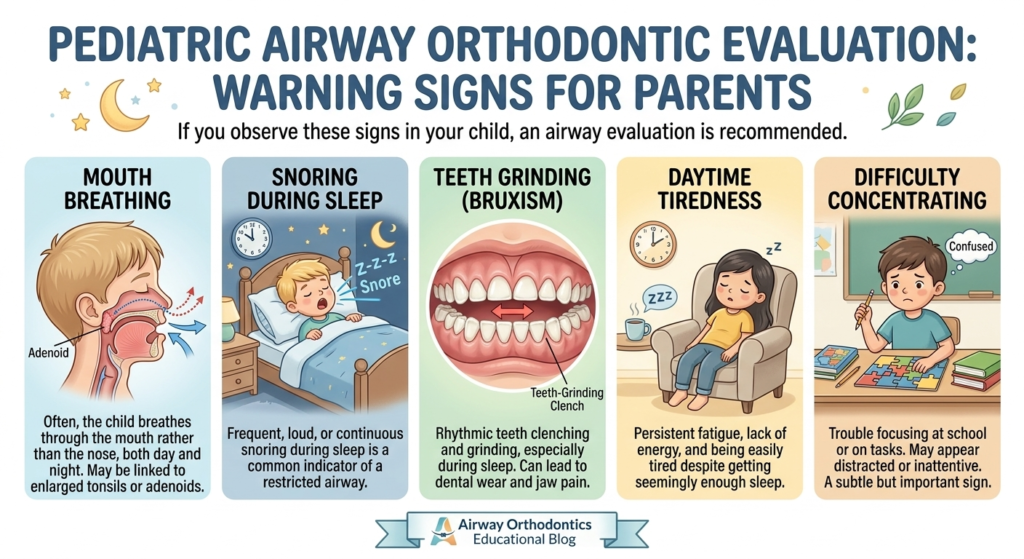
I recommend an airway orthodontic assessment if your child shows any of the following signs:
Early evaluation is important. The younger the child, the more flexible the jaw and skull bones are, and the greater the potential for non-surgical improvement.
If your ENT specialist has recommended removing your child’s tonsils, I am not saying that is wrong. Tonsillectomy can absolutely be the right choice, particularly for recurrent infections or very high-grade obstruction. But I do encourage you to also have an airway orthodontic evaluation alongside that recommendation.
Understanding the full picture,jaw structure, tongue function, and nasal airway dimensions, helps ensure your child gets the most complete, lasting solution possible. Better breathing leads to better sleep. Better sleep leads to better growth, better focus, and a happier child. That is what we are working toward together.
Dr. Ankita Explain Pediatric Airway & Tonsil Concerns
Yes, significantly. Enlarged tonsils and adenoids can cause obstructive sleep apnea in children, leading to fragmented sleep, snoring, and daytime tiredness. Poor sleep in children is also linked to behavioural issues, difficulty concentrating, and slowed growth. If your child snores or wakes up unrefreshed, an airway evaluation is highly recommended.
Not necessarily. Mouth breathing can persist even after tonsillectomy if there are structural issues such as a narrow jaw, a backward jaw position, or poor tongue posture that were not addressed. A comprehensive airway evaluation before or alongside surgery helps identify all contributing factors and gives your child the best chance at full recovery.
Regular orthodontics focuses primarily on straightening teeth and aligning the bite. Airway orthodontics takes a broader view, it considers how the structure of the jaw, palate, and facial bones affects your child's ability to breathe through the nose. Treatments like palate expansion, forward jaw development, and tongue tie release are used to improve the airway, not just the smile.
There is no single right age, but earlier is generally better because children's bones are more adaptable. I recommend bringing your child for an evaluation as soon as you notice signs like mouth breathing, snoring, or poor sleep, even from ages 3 to 5. Interceptive treatment between ages 6 and 10 is particularly effective for jaw expansion and airway improvement.
Most children tolerate palate expanders quite well. There may be mild discomfort or a feeling of pressure for the first few days after each adjustment, but this usually settles quickly. The long-term benefits, improved nasal breathing, better sleep, and better facial development, far outweigh the temporary discomfort.
Myofunctional therapy is a specialised exercise programme that retrains the muscles of the tongue, lips, and face to function correctly, particularly for nasal breathing, proper swallowing, and good tongue posture. If your child has no structural jaw problems but still mouth breathes or has poor tongue posture, myofunctional therapy may be the primary or complementary treatment recommended.
Copyright ©2025 TMJ, Tongue Tie and Sleep Institute. All Rights Reserved.
WhatsApp us
Let Us Know How Can We Help You!
At our institute, we take pride in providing complete care for issues related to tongue tie and TMJ. To enhance your quality of life, we treat a range of ailments with state-of-the-art technology and expert care. If you’re searching for an effective tongue-tie operation option or a TMJ specialist in India, you have arrived at the right place.
A tongue tie operation or tongue tie surgery is a life-changing procedure that not only restores tongue mobility but also has a full body effect. While most people associate tongue tie with breastfeeding difficulties in infants, it can also affect speech, breathing, posture, dental health, and sleep patterns in older children and adults. By undergoing this minimally invasive fascia release procedure, patients often experience immediate improvements in functionality and overall well-being.
For individuals considering tongue tie surgery, the benefits are far-reaching:
The Temporomandibular Joint (TMJ) that is your Jaw Joint has a significant impact on one’s quality of life, as they leave the person feeling exhausted and irritable. It not only affects essential functions like chewing, speaking, yawning but also affects one’s posture, breathing and sleep. As a leading TMJ specialist in Mumbai, we offer comprehensive diagnostics and personalized treatment plans to address your unique needs.
Our approach to TMJ disorders combines state-of-the-art technology with evidence-based practices. We specialize in:
Many patients are unaware that tongue tie and TMJ disorders can also be interconnected. A restricted tongue can lead to compensatory behaviors that strain the jaw, progressing towards TMJ issues.
For newborns, a tongue tie operation is critical in supporting breastfeeding. Infants struggling to latch or feed effectively benefit greatly from a quick and safe procedure.
Adults often seek tongue tie operations for relief from symptoms such as speech impediments, TMJ pain, or even snoring. Combining tongue tie surgery with myofunctional therapy ensures optimal results.
An integral part of our treatment protocols is myofunctional therapy. Exercises used in this therapy help to strengthen and coordinate the muscles of the tongue and face. Whether you’re undergoing a tongue tie operation or being treated for TMJ issues, myofunctional therapy plays a pivotal role in ensuring lasting outcomes. Expertise and complete treatment are essential for treating TMJ issues or tongue tie. Whether you’re searching for the best tongue tie surgery options or a trusted TMJ specialist in Mumbai, we ensure personalized care and transformative results. Don’t let these conditions stop you—reach out to us today to book your consultation and start your journey toward better health and wellness.