







Tonsil and adenoid removal does not weaken a child’s long-term immunity. When these tissues are enlarged or infected, removing them can actually enhance breathing, improve sleep patterns, and support better overall well-being.
Tonsils and adenoids assist in identifying bacteria and viruses that enter through the mouth and nasal passages. They are an essential part of the immune system but not the sole structures responsible for immunity.
Tonsils and adenoids function as an important part of the body’s immune defense system. , especially in early childhood,They act as the first line of defense by identifying and responding to bacteria and viruses that enter through the mouth and nose.
Because of this role, many parents worry that removing them may weaken their child’s immunity. This concern is valid, but it needs to be understood in the right context.
The immune system is not dependent on a single structure. Even if the tonsils and adenoids are surgically removed , other immune tissues in the body continue to function effectively.
Common symptoms include snoring, mouth breathing, disturbed sleep, and recurrent infections, which often point toward airway obstruction rather than just a throat issue. Children may also show signs like restless sleep, frequent waking, or daytime fatigue. In many cases, these symptoms are ignored as “normal,” but they indicate compromised breathing patterns that need evaluation.
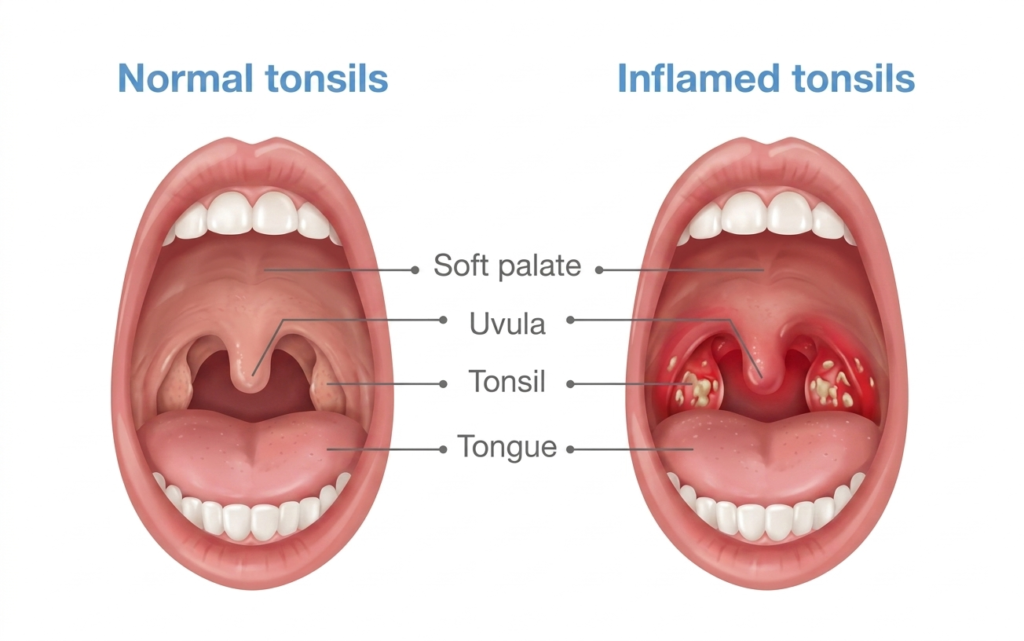
Doctors recommend removal when enlarged tonsils or adenoids cause breathing problems, disturbed sleep, or recurring infections
Severe cases, such as grade 3 or 4 enlargement, often require surgical intervention.
Current clinical understanding suggests that removing tonsils and adenoids does not significantly affect a child’s long-term ability to fight infections.
In fact, in children where these tissues are chronically enlarged or infected, they may stop functioning efficiently as immune organs. Instead of protecting the body, they can become a source of repeated infections or airway obstruction.
In such cases, removal often improves overall health rather than compromising immunity.
Tonsil and adenoid removal is not recommended for every child. It is usually considered when their size or condition begins to interfere with normal function.
In clinical practice, this is commonly seen when tonsils or adenoids are classified as grade 3 or grade 4 enlargement, where they significantly block the airway.
Children in these situations may experience:
When airway obstruction becomes significant, leaving the tonsils untreated can affect sleep quality, growth, and overall development. In such cases, removal is often the most effective option.
Common symptoms include snoring, mouth breathing, disturbed sleep, and recurrent infections, which often point toward airway obstruction rather than just a throat issue. Children may also show signs like restless sleep, frequent waking, or daytime fatigue. In many cases, these symptoms are ignored as “normal,” but they indicate compromised breathing patterns that need evaluation.
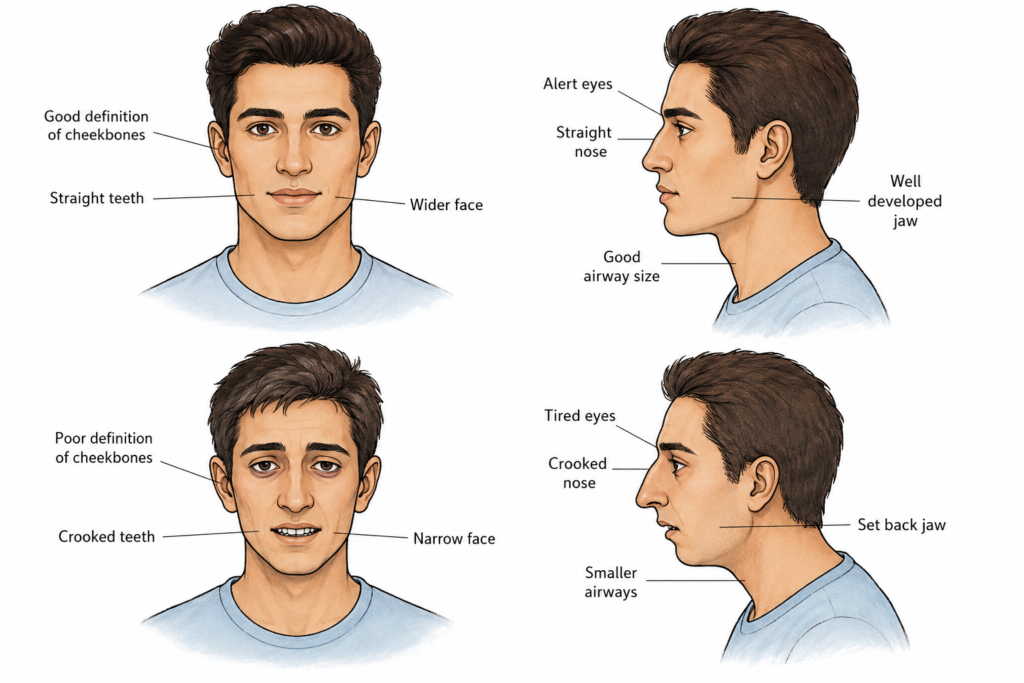
Enlarged tonsils reduce airway space and force children to rely on mouth breathing instead of nasal breathing. Over time, this altered breathing pattern can impact jaw development, facial growth, and tongue posture. If not addressed early, it may influence long-term airway function and overall craniofacial development.
This is where functional and airway-focused therapies come into play.
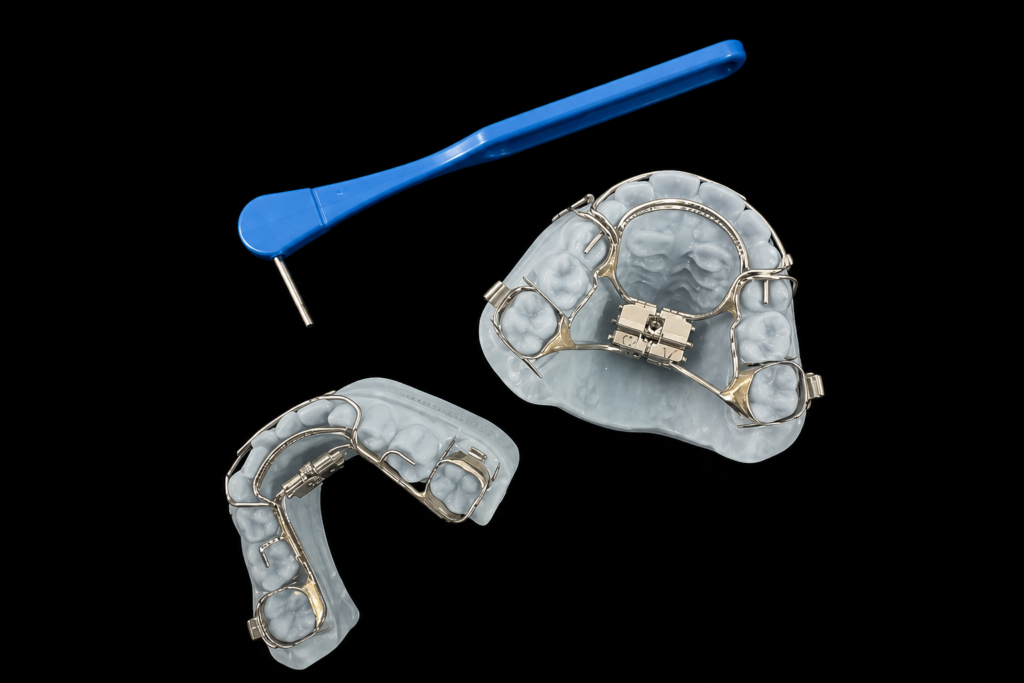
In selected cases, improving airway space and function can reduce the need for surgery.
One approach involves airway orthodontic expansion, where the jaw is guided to develop more space This can improve nasal breathing and reduce airway restriction.
Another important component is myofunctional therapy, which helps retrain the muscles of the tongue and face. This improves tongue posture and breathing patterns, supporting better airway function over time.
In some children, a tongue-tie (ankyloglossia) may restrict tongue movement and contribute to poor oral posture. When indicated, a tongue-tie release can help improve function and breathing patterns.
These approaches do not replace surgery in severe cases but can be highly effective when used at the right stage.
A personalized treatment approach based on severity, symptoms, and airway impact provides the best outcomes. Both surgical and non-surgical options should be evaluated carefully. The goal is to ensure proper breathing, healthy development, and long-term airway stability rather than focusing only on removal or preservation.
From a clinical perspective, chronically enlarged tonsils often lose their effectiveness as immune organs. Instead of protecting the body, they may become a source of repeated infections or obstruction. In such cases, removal improves overall health without negatively parents often asking that if I remove it will regrow- now this depends on the skill of the surgeon and if they have not addressed other airway issues like shape of jaw or muscle tone or tongue tie long-term immunity.
A personalized treatment approach based on severity, symptoms, and airway impact provides the best outcomes. Both surgical and non-surgical options should be evaluated carefully. The goal is to ensure proper breathing, healthy development, and long-term airway stability rather than focusing only on removal or preservation.
If your child has symptoms like mouth breathing, snoring, or frequent infections, early evaluation can help determine the right treatment approach.
Consult Dr. Ankita Shah in Mumbai or Delhi for a personalized airway-focused assessment. Call or WhatsApp: +91 9820737209.
No, tonsil removal does not weaken a child’s immunity. The body has multiple defense mechanisms, and other immune tissues continue to protect against infections effectively.
Tonsils are considered enlarged when they reach Grade 3 or Grade 4, especially if they start affecting breathing, swallowing, or sleep quality.
Yes, enlarged adenoids can block the nasal airway, leading to mouth breathing, snoring, and disturbed sleep patterns.
Yes, mild cases can often be managed with airway expansion techniques, myofunctional therapy, and improving tongue posture and function.
No, surgery is only recommended when symptoms are severe, persistent, or significantly affecting breathing, sleep, or overall health.
Yes, in children with airway obstruction, tonsil removal often leads to better breathing, reduced snoring, and improved sleep quality.
Copyright ©2025 TMJ, Tongue Tie and Sleep Institute. All Rights Reserved.
WhatsApp us
Let Us Know How Can We Help You!
At our institute, we take pride in providing complete care for issues related to tongue tie and TMJ. To enhance your quality of life, we treat a range of ailments with state-of-the-art technology and expert care. If you’re searching for an effective tongue-tie operation option or a TMJ specialist in India, you have arrived at the right place.
A tongue tie operation or tongue tie surgery is a life-changing procedure that not only restores tongue mobility but also has a full body effect. While most people associate tongue tie with breastfeeding difficulties in infants, it can also affect speech, breathing, posture, dental health, and sleep patterns in older children and adults. By undergoing this minimally invasive fascia release procedure, patients often experience immediate improvements in functionality and overall well-being.
For individuals considering tongue tie surgery, the benefits are far-reaching:
The Temporomandibular Joint (TMJ) that is your Jaw Joint has a significant impact on one’s quality of life, as they leave the person feeling exhausted and irritable. It not only affects essential functions like chewing, speaking, yawning but also affects one’s posture, breathing and sleep. As a leading TMJ specialist in Mumbai, we offer comprehensive diagnostics and personalized treatment plans to address your unique needs.
Our approach to TMJ disorders combines state-of-the-art technology with evidence-based practices. We specialize in:
Many patients are unaware that tongue tie and TMJ disorders can also be interconnected. A restricted tongue can lead to compensatory behaviors that strain the jaw, progressing towards TMJ issues.
For newborns, a tongue tie operation is critical in supporting breastfeeding. Infants struggling to latch or feed effectively benefit greatly from a quick and safe procedure.
Adults often seek tongue tie operations for relief from symptoms such as speech impediments, TMJ pain, or even snoring. Combining tongue tie surgery with myofunctional therapy ensures optimal results.
An integral part of our treatment protocols is myofunctional therapy. Exercises used in this therapy help to strengthen and coordinate the muscles of the tongue and face. Whether you’re undergoing a tongue tie operation or being treated for TMJ issues, myofunctional therapy plays a pivotal role in ensuring lasting outcomes. Expertise and complete treatment are essential for treating TMJ issues or tongue tie. Whether you’re searching for the best tongue tie surgery options or a trusted TMJ specialist in Mumbai, we ensure personalized care and transformative results. Don’t let these conditions stop you—reach out to us today to book your consultation and start your journey toward better health and wellness.