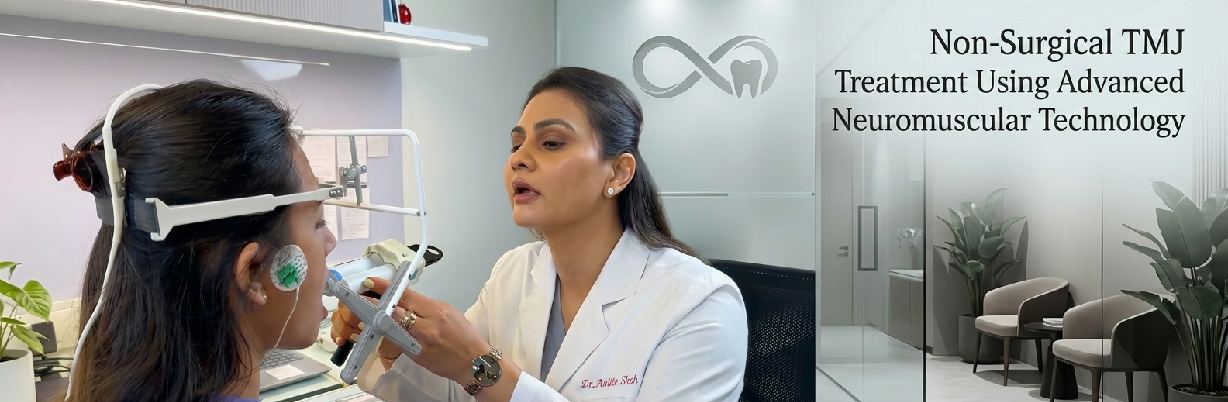







As a TMJ Expert & an airway-focused orthodontist, one of the most significant shifts I have witnessed in recent years is how patients are beginning to take their jaw health into their own hands-and how technology is making that possible. In India, Dubai & globally, where access to specialist care is often limited by geography and cost, digital diagnosis and at-home rehabilitation for TMJ disorders is no longer a future concept. It is happening right now.
Digital TMJ diagnosis uses advanced imaging, virtual consultations, and digital screening tools to evaluate temporomandibular joint dysfunction – often without requiring an immediate clinic visit. This modern approach helps patients receive early assessment, airway evaluation, and treatment planning remotely.
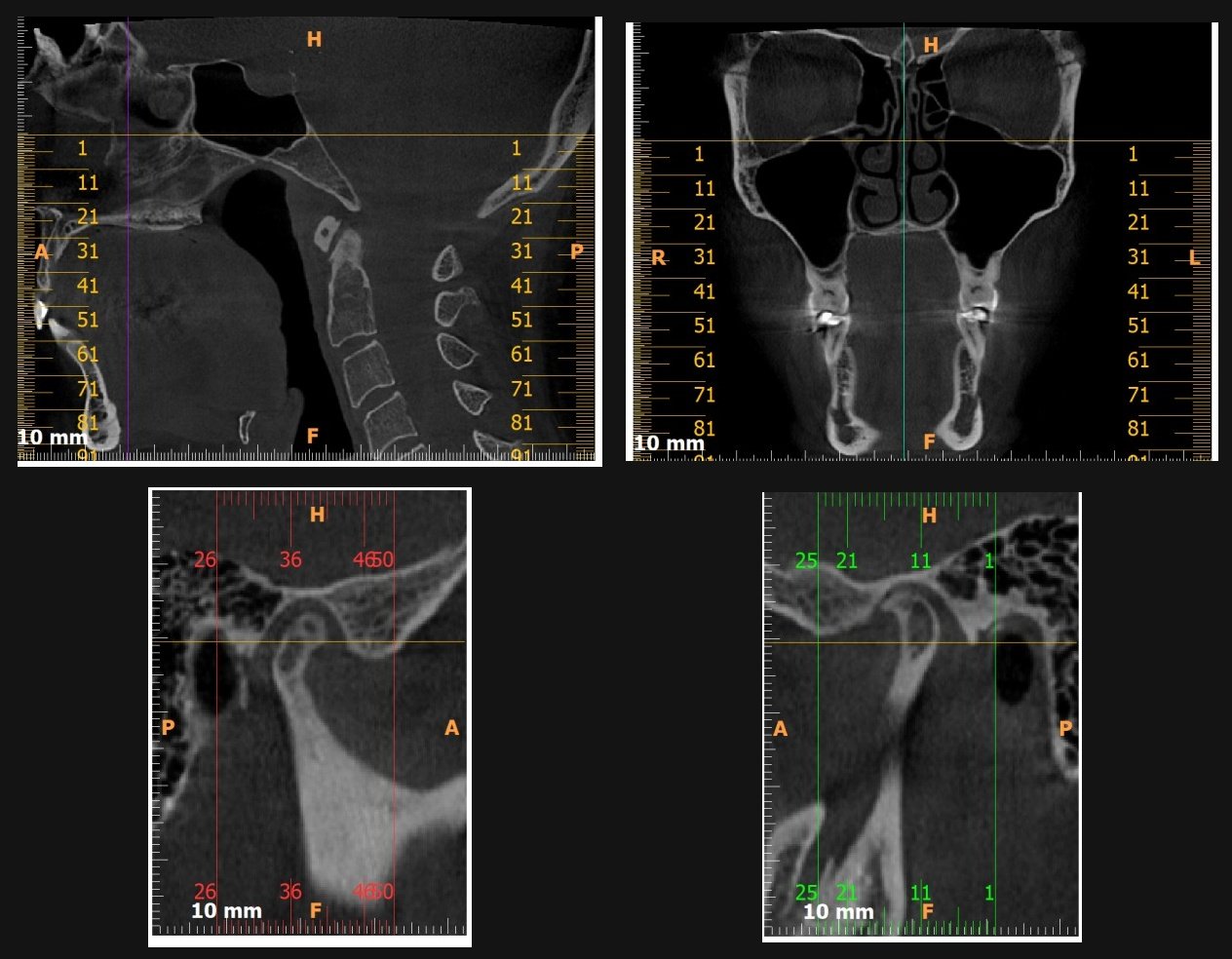
CBCT (Cone Beam Computed Tomography) provides detailed 3D imaging of the jaw joints, condyles, surrounding bone, and airway. It helps identify:
Unlike traditional X-rays, CBCT imaging gives a complete three-dimensional view of the TMJ and airway system.
Patients can submit photographs and videos showing:
These records help specialists evaluate jaw mechanics remotely.
Modern symptom screeners analyze jaw pain patterns, headaches, clicking, airway symptoms, clenching habits, and functional limitations to estimate the likelihood of TMJ dysfunction and guide further evaluation.
Patients can securely share CBCT scans, photographs, and symptom histories with TMJ specialists online for remote diagnosis, treatment planning, and follow-up care.
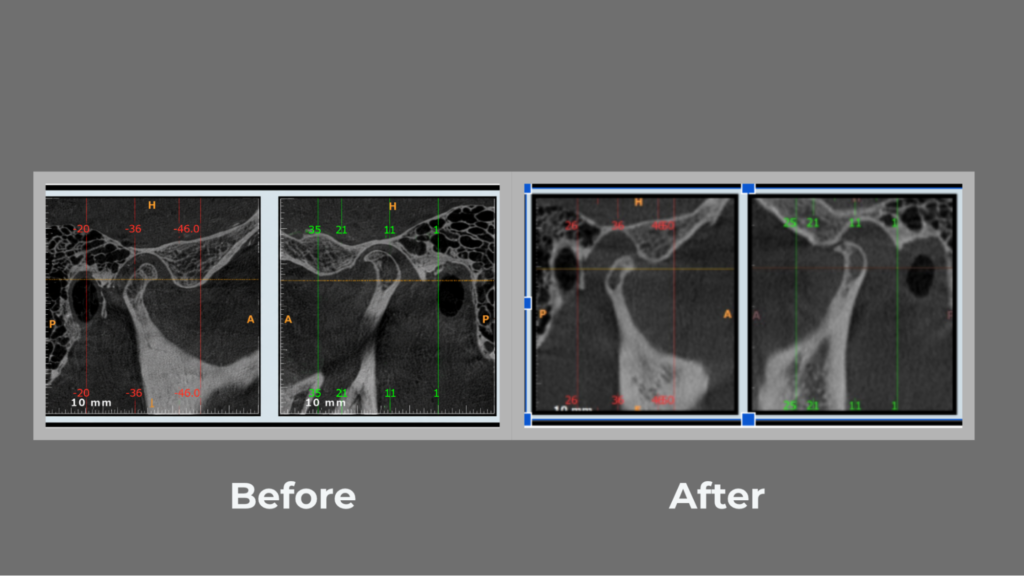
In my practice, CBCT imaging is used not only for diagnosis but also to monitor treatment progress over time. Comparing pre-treatment and post-treatment scans allows us to objectively evaluate improvements in airway dimensions, condylar position, jaw balance, and overall TMJ function – providing measurable visual evidence that clinical examination alone cannot offer.
While a specialist must interpret your CBCT scan formally, patients benefit enormously from understanding what their imaging shows. Raising the level of home diagnosis starts with health literacy.
A healthy TMJ shows balanced joint spacing between the condyle (jaw bone) and the articular fossa (skull socket) on both sides. Uneven joint space may indicate disc displacement, condylar compression, or early TMJ degeneration.
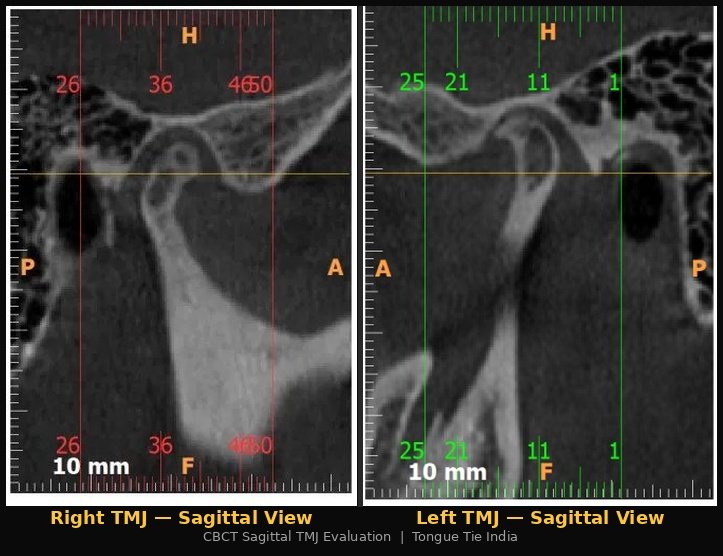
The condyle should appear smooth, rounded, and well-defined. Flattening, erosions, osteophytes, or irregular bony surfaces are signs of degenerative joint disease and chronic joint overload.
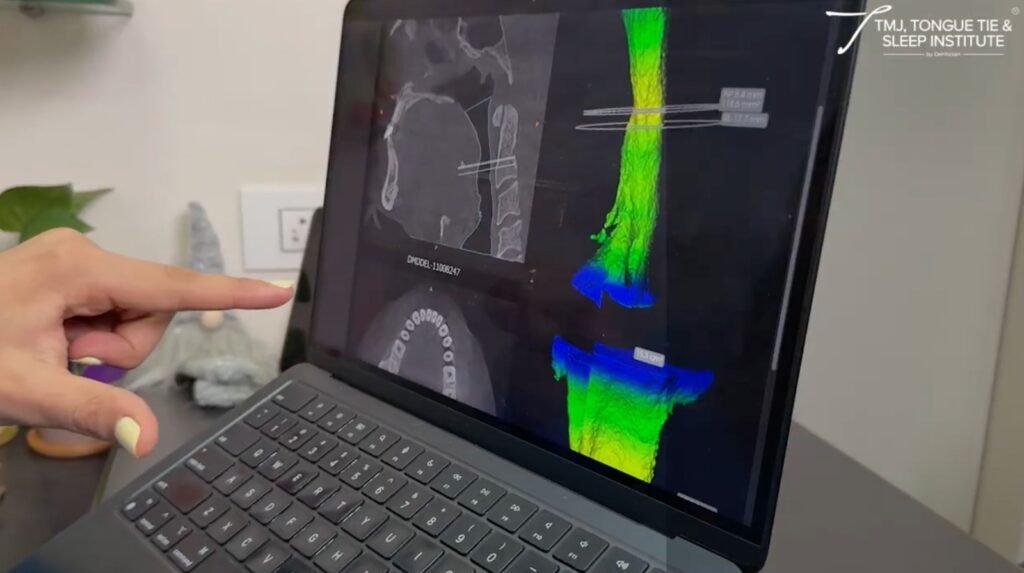
CBCT helps assess the upper airway in three dimensions. An airway measuring less than 10 mm at its narrowest point is commonly associated with sleep–disordered breathing, airway restriction, and increased TMJ strain.
When the condyle sits too far back within the socket (posterior condylar displacement), it compresses the retrodiscal tissues behind the joint. This is one of the most common structural causes of chronic TMJ pain, inflammation, headaches, and jaw dysfunction.
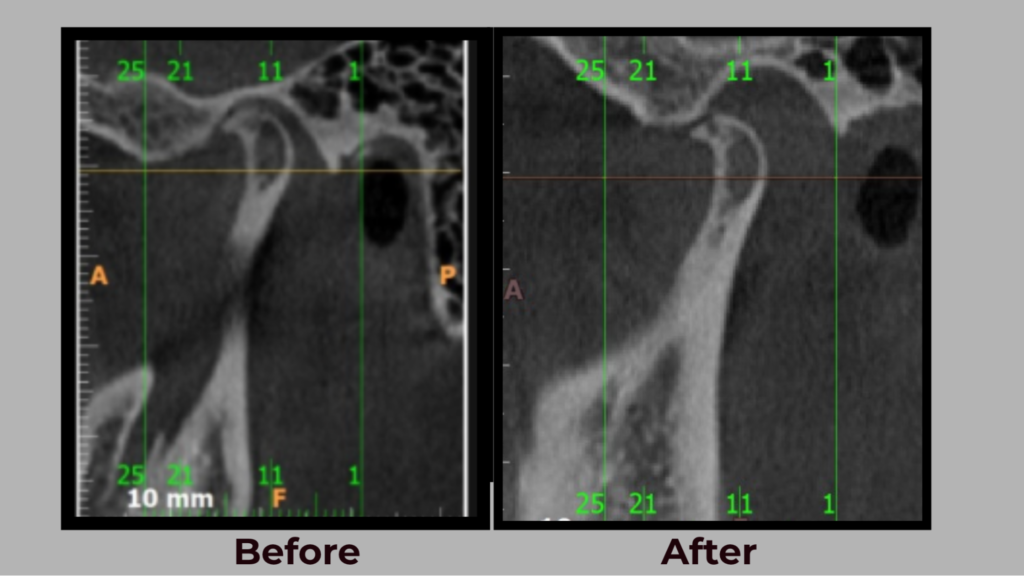
CBCT comparison imaging allows patients to visually understand treatment changes. Post-treatment scans may demonstrate:
This objective imaging helps track healing, stability, and long-term TMJ treatment outcomes.
These simple, evidence-based techniques help reduce jaw tension, improve muscle balance, and support TMJ recovery when practiced consistently.
Inhale through the nose for 4 counts, hold for 2 counts, then exhale slowly for 6 counts. Repeat for 5 minutes twice daily. Deep nasal breathing activates the parasympathetic nervous system and helps reduce jaw clenching and facial muscle tension.
Rest the tongue gently against the roof of the mouth with the lips closed and teeth slightly apart. Breathe through the nose. Proper tongue posture reduces unnecessary jaw muscle activation and improves overall jaw stability.
Place your fingers over the masseter muscle just below the cheekbone. Apply gentle circular pressure for 30 seconds while slowly moving downward along the muscle. Repeat daily on both sides to reduce tightness and trigger points.
Pull the chin straight backward – not downward – creating a slight double chin. Hold for 5 seconds and relax. Repeat 10 times, three times daily. This exercise helps correct forward head posture, which commonly overloads the TMJ.
Place the tongue on the palate and slowly open the mouth while keeping the tongue in contact with the roof of the mouth. Close slowly and repeat 10 times twice daily. This retrains symmetrical jaw movement and improves joint coordination.
These techniques are supportive for mild TMJ symptoms, muscle tension, jaw fatigue, and postural strain. Persistent pain, locking, or severe jaw dysfunction should always be evaluated by a qualified TMJ specialist.
Self-release techniques help manage pain in the moment. Myofunctional therapy is different – it focuses on daily training to retrain the muscles, tongue posture, and breathing habits that contribute to TMJ dysfunction. These morning and evening routines are designed to build long-term muscle memory, support jaw stability, and improve airway function over time.
Activate – prepare the jaw and airway for the day ahead.
Place the tongue gently against the roof of the mouth and hold for 5 seconds. Repeat 10 times. This exercise strengthens proper tongue posture, supports jaw stability, and encourages better oral muscle coordination.
Keep the lips closed and breathe only through the nose for 2 minutes. Nasal breathing improves oxygen flow, reduces mouth-breathing habits, and helps decrease tension in the jaw and facial muscles.
Rest the tongue on the palate and slowly open and close the mouth while maintaining tongue contact. Repeat 10 times. This retrains smooth, symmetrical jaw movement and reduces strain on the TMJ.
Release – unwind the tension accumulated throughout the day.
Massage the jaw muscles in gentle circular motions for 1 minute on each side. This helps release muscle tightness, improve circulation, and reduce facial tension associated with clenching or grinding.
Practice slow, deep breathing using the diaphragm for 5 minutes. This activates the body’s natural relaxation response, lowers stress levels, and decreases clenching-related muscle activity in the jaw and neck.
Pull the chin straight backward to create a slight double chin. Hold briefly and repeat 10 times. This helps correct forward-head posture and reduces excessive pressure on the TMJ and surrounding muscles.
Seek an in-person consultation if you experience:
Dr. Ankita Shah or virtual TMJ consultation and take the first step toward long-term jaw pain relief.
A formal diagnosis requires specialist evaluation, but at-home self-assessment combined with CBCT imaging reviewed virtually makes early diagnosis increasingly accessible to Indian patients regardless of location.
A CBCT scan is a 3D X-ray providing a detailed view of the jaw joint, bone structure, and airway. It is one of the most accurate diagnostic tools for TMJ disorders and can be done at most radiology centres across India, with images shared digitally for specialist review.
Diaphragmatic breathing, tongue posture correction, masseter self-massage, cervical chin tucks, and controlled jaw opening exercises practiced daily reduce muscle tension and improve jaw alignment.
A specialist-guided programme of myofunctional therapy, self-release techniques, and posture correction delivered remotely via video consultation, app, or guided PDF-specifically targeting the muscles affecting the TMJ, airway, and facial structure.
Yes-26-35% of adults experience TMJ dysfunction at some point, yet it remains significantly underdiagnosed because symptoms are frequently attributed to other causes.
Yes. Children with mouth breathing, tongue tie, teeth grinding, or narrow jaw development are at risk. Watch for jaw clicking during meals, difficulty chewing, ear pain, and restless sleep.
WhatsApp us
Let Us Know How Can We Help You!
At our institute, we take pride in providing complete care for issues related to tongue tie and TMJ. To enhance your quality of life, we treat a range of ailments with state-of-the-art technology and expert care. If you’re searching for an effective tongue-tie operation option or a TMJ specialist in India, you have arrived at the right place.
A tongue tie operation or tongue tie surgery is a life-changing procedure that not only restores tongue mobility but also has a full body effect. While most people associate tongue tie with breastfeeding difficulties in infants, it can also affect speech, breathing, posture, dental health, and sleep patterns in older children and adults. By undergoing this minimally invasive fascia release procedure, patients often experience immediate improvements in functionality and overall well-being.
For individuals considering tongue tie surgery, the benefits are far-reaching:
The Temporomandibular Joint (TMJ) that is your Jaw Joint has a significant impact on one’s quality of life, as they leave the person feeling exhausted and irritable. It not only affects essential functions like chewing, speaking, yawning but also affects one’s posture, breathing and sleep. As a leading TMJ specialist in Mumbai, we offer comprehensive diagnostics and personalized treatment plans to address your unique needs.
Our approach to TMJ disorders combines state-of-the-art technology with evidence-based practices. We specialize in:
Many patients are unaware that tongue tie and TMJ disorders can also be interconnected. A restricted tongue can lead to compensatory behaviors that strain the jaw, progressing towards TMJ issues.
For newborns, a tongue tie operation is critical in supporting breastfeeding. Infants struggling to latch or feed effectively benefit greatly from a quick and safe procedure.
Adults often seek tongue tie operations for relief from symptoms such as speech impediments, TMJ pain, or even snoring. Combining tongue tie surgery with myofunctional therapy ensures optimal results.
An integral part of our treatment protocols is myofunctional therapy. Exercises used in this therapy help to strengthen and coordinate the muscles of the tongue and face. Whether you’re undergoing a tongue tie operation or being treated for TMJ issues, myofunctional therapy plays a pivotal role in ensuring lasting outcomes. Expertise and complete treatment are essential for treating TMJ issues or tongue tie. Whether you’re searching for the best tongue tie surgery options or a trusted TMJ specialist in Mumbai, we ensure personalized care and transformative results. Don’t let these conditions stop you—reach out to us today to book your consultation and start your journey toward better health and wellness.