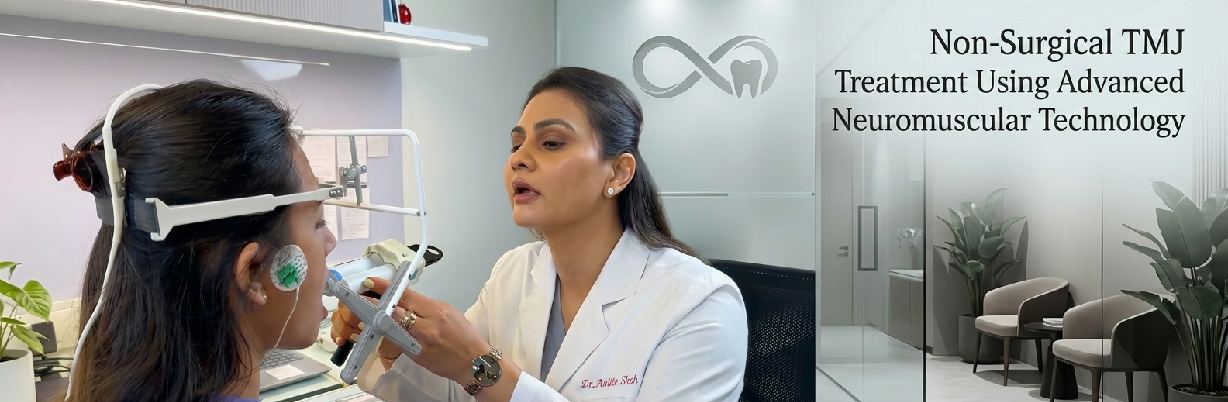







If you’ve ever woken up with jaw pain that seems to appear out of nowhere, or noticed that your jaw clicks more during certain times of the month, you’re not imagining things. For many women, these symptoms aren’t random, they’re directly connected to hormonal changes happening in your body.
As a TMJ specialist in Mumbai, I’ve treated countless women who didn’t realize their jaw pain was linked to their hormones. Understanding this connection is crucial because it changes how we approach treatment and helps you recognize patterns in your own body.
The temporomandibular joint (TMJ) is one of the most complex joints in your body. It connects your jawbone to your skull and works like a sliding hinge, allowing you to talk, chew, yawn, and swallow. You have two TMJ joints, one on each side of your face, just in front of your ears.
When something goes wrong with this joint or the muscles surrounding it, we call it temporomandibular joint disorder (TMD or TMJ disorder). It’s more common than you might think, affecting millions of people worldwide.
Common TMJ symptoms include:
What many people don’t realize is that these symptoms often worsen during specific times and for women, these times frequently align with hormonal changes.
This isn’t coincidental. Your temporomandibular joint contains receptors for estrogen and progesterone, the primary female reproductive hormones. When these hormone levels change throughout your menstrual cycle, during pregnancy, or as you approach menopause, they directly impact your TMJ in several ways:
Estrogen’s Impact:
Estrogen helps regulate inflammation, supports collagen production in joint tissues, and influences how you perceive pain. When estrogen levels drop—such as before your period or during menopause—you may experience:
Progesterone’s Role:
Progesterone affects muscle tone and relaxation. Fluctuations in progesterone can lead to:
Cortisol and Stress Hormones:
Stress hormones like cortisol don’t just affect your mood—they directly impact your jaw. When cortisol levels rise, you’re more likely to clench your jaw unconsciously, especially during sleep.
TMJ Prevalence: Women vs. Men
| Factor | Women | Men |
| Overall TMJ Cases | 75-80% | 20-25% |
| Peak Age Range | 20-40 years | 40+ years |
| Hormonal Influence | Significant | Minimal |
| Severity of Symptoms | Moderate to Severe | Mild to Moderate |
| Chronic Cases | Higher percentage | Lower percentage |
This data clearly shows that being a woman significantly increases your risk of developing TMJ disorder, and hormones are a major reason why.
Cortisol, your body’s primary stress hormone, creates a perfect storm for TMJ problems. When you’re stressed, your cortisol levels spike, causing:
Muscle Clenching: You unconsciously tighten your jaw muscles, often without realizing it. Many of my patients grind their teeth at night (a condition called bruxism) as a direct result of stress and elevated cortisol.
Inflammation: Chronic stress increases inflammatory markers throughout your body, including in your jaw joint.
Disrupted Sleep: High cortisol affects sleep quality, and poor sleep means less time for your body to repair and heal including your TMJ.
Women often experience higher baseline stress levels due to managing multiple responsibilities work, family, household duties and this cumulative stress directly translates to jaw tension.
During Your Menstrual Cycle:
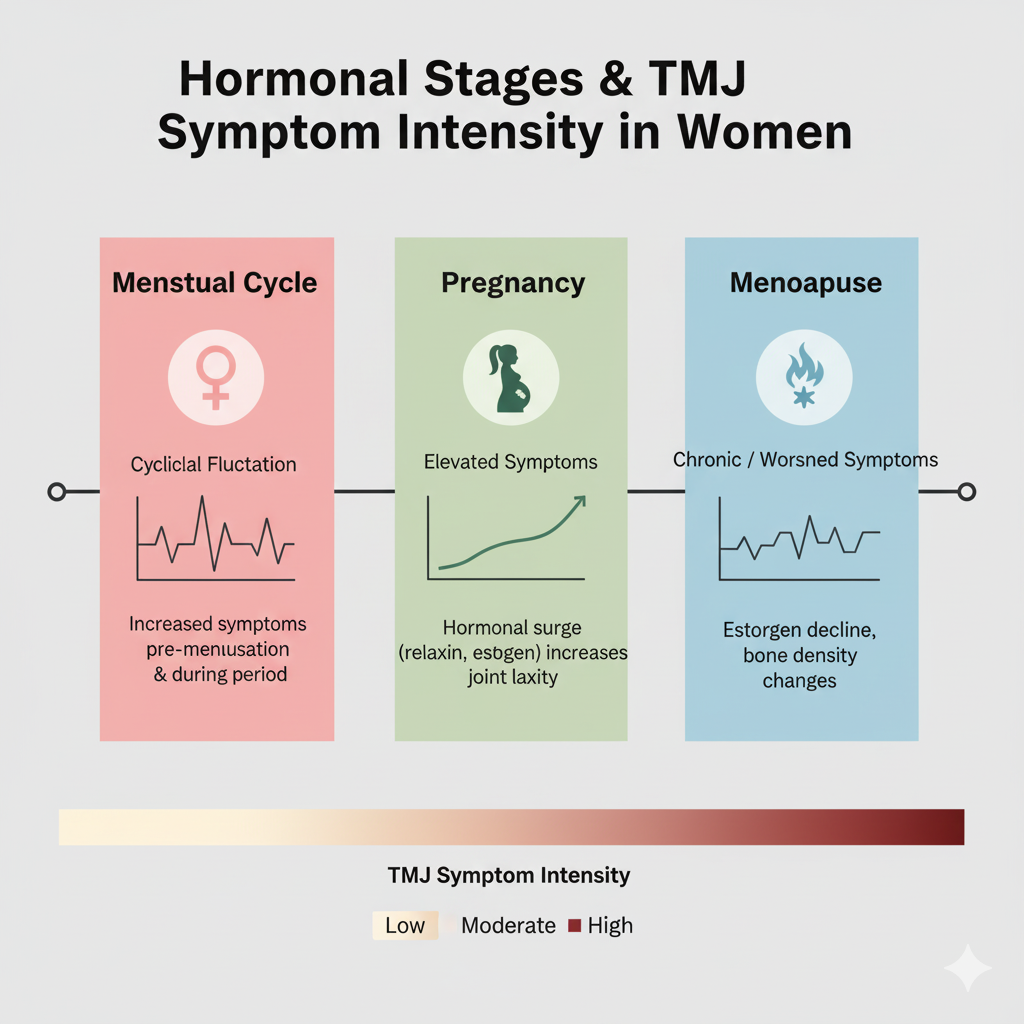
Many women notice their jaw pain follows a predictable monthly pattern. Research shows that approximately 65% of women with TMJ disorders report symptom flare-ups during the premenstrual and menstrual phases when estrogen and progesterone levels drop sharply.
You might notice:
During Pregnancy:
Pregnancy brings dramatic hormonal shifts. While some women experience relief from TMJ symptoms during pregnancy (due to high hormone levels), others develop new problems due to:
During Menopause:
Menopause represents a permanent shift to lower estrogen levels, and many women experience their first TMJ symptoms or worsening of existing problems during this time. The chronic estrogen deficiency can lead to:
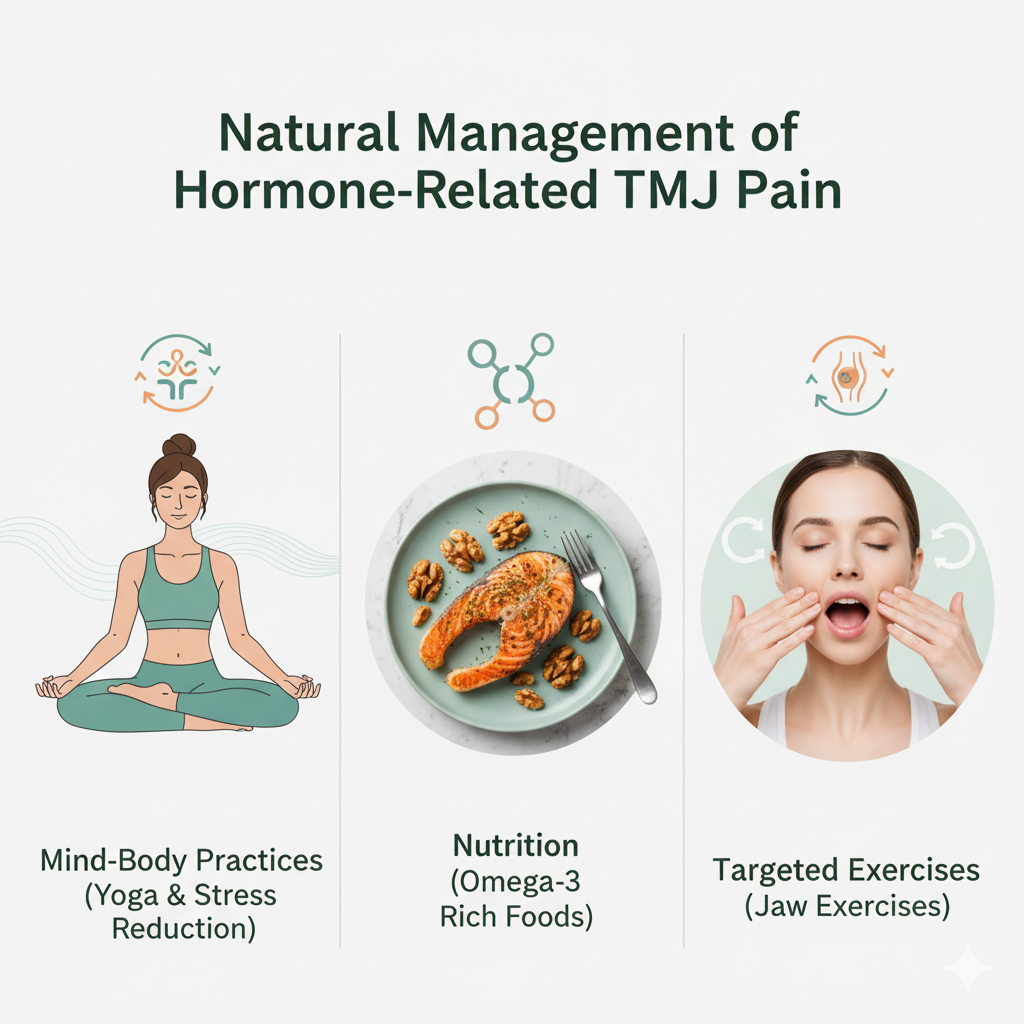
Understanding the hormone–TMJ connection opens the door to more targeted and effective treatment approaches. Below is a structured list with clear action steps.
Hormone fluctuations triggering TMJ disorder isn’t something you have to simply endure. By understanding how estrogen, progesterone, and cortisol affect your jaw joint, you can take proactive steps to minimize symptoms and seek appropriate treatment when needed.
Key takeaways to remember:
Schedule a consultation today to explore personalized treatment options that consider your unique hormonal patterns and lifestyle needs.
Yes, hormonal imbalance can directly cause or worsen TMJ pain. The temporomandibular joint contains estrogen and progesterone receptors, making it highly sensitive to hormonal fluctuations. When these hormones become imbalanced—during menstrual cycles, pregnancy, or menopause—the joint experiences increased inflammation, reduced cartilage support, and heightened pain sensitivity. Many women notice their jaw pain worsens during the premenstrual phase when estrogen and progesterone levels drop significantly.
Women represent 75-80% of all TMJ cases primarily due to hormonal factors. Female reproductive hormones (estrogen and progesterone) directly affect the TMJ through receptors in joint tissues. Additionally, women have anatomical differences including smaller jaw structures, more flexible connective tissues, and experience greater hormonal fluctuations throughout their lives—during menstruation, pregnancy, and menopause. These biological differences, combined with typically higher stress levels, make women significantly more vulnerable to TMJ disorders.
Estrogen and progesterone regulate multiple aspects of TMJ health. Estrogen supports collagen production in joint cartilage, maintains bone density, and controls inflammation levels. When estrogen drops (before menstruation or during menopause), joint protection decreases. Progesterone affects muscle tone and neurotransmitter function—when levels fluctuate, jaw muscle tension increases. Research shows that 65% of women with TMJ report symptom flare-ups during low-hormone phases of their menstrual cycle.
Both menopause and pregnancy can trigger or worsen TMJ disorders through different mechanisms. During pregnancy, high relaxin hormone levels increase joint laxity, while postural changes and stress contribute to jaw dysfunction. Menopause causes chronically low estrogen levels, leading to persistent inflammation, reduced joint lubrication, and decreased bone density in the jaw joint. Many women experience their first TMJ symptoms or significant worsening during these major hormonal transitions.
Stress hormones, particularly cortisol, worsen TMJ through multiple pathways. Elevated cortisol triggers unconscious jaw clenching and teeth grinding (bruxism), especially during sleep. It also increases systemic inflammation, disrupts sleep quality (reducing healing time), and creates a pain-stress cycle. Women often experience cumulative stress from managing multiple responsibilities, leading to chronically elevated cortisol that directly translates to jaw muscle tension and TMJ dysfunction.
Managing hormone-related TMJ pain requires a comprehensive approach: track symptoms alongside your menstrual cycle to identify patterns; practice stress management techniques like meditation and yoga; maintain anti-inflammatory nutrition with omega-3s and magnesium; apply warm compresses and perform gentle jaw exercises; consider custom oral appliances for nighttime protection; and work with a TMJ specialist who addresses hormonal factors. Combining natural approaches with professional treatment provides the best long-term outcomes.
WhatsApp us
Let Us Know How Can We Help You!
At our institute, we take pride in providing complete care for issues related to tongue tie and TMJ. To enhance your quality of life, we treat a range of ailments with state-of-the-art technology and expert care. If you’re searching for an effective tongue-tie operation option or a TMJ specialist in India, you have arrived at the right place.
A tongue tie operation or tongue tie surgery is a life-changing procedure that not only restores tongue mobility but also has a full body effect. While most people associate tongue tie with breastfeeding difficulties in infants, it can also affect speech, breathing, posture, dental health, and sleep patterns in older children and adults. By undergoing this minimally invasive fascia release procedure, patients often experience immediate improvements in functionality and overall well-being.
For individuals considering tongue tie surgery, the benefits are far-reaching:
The Temporomandibular Joint (TMJ) that is your Jaw Joint has a significant impact on one’s quality of life, as they leave the person feeling exhausted and irritable. It not only affects essential functions like chewing, speaking, yawning but also affects one’s posture, breathing and sleep. As a leading TMJ specialist in Mumbai, we offer comprehensive diagnostics and personalized treatment plans to address your unique needs.
Our approach to TMJ disorders combines state-of-the-art technology with evidence-based practices. We specialize in:
Many patients are unaware that tongue tie and TMJ disorders can also be interconnected. A restricted tongue can lead to compensatory behaviors that strain the jaw, progressing towards TMJ issues.
For newborns, a tongue tie operation is critical in supporting breastfeeding. Infants struggling to latch or feed effectively benefit greatly from a quick and safe procedure.
Adults often seek tongue tie operations for relief from symptoms such as speech impediments, TMJ pain, or even snoring. Combining tongue tie surgery with myofunctional therapy ensures optimal results.
An integral part of our treatment protocols is myofunctional therapy. Exercises used in this therapy help to strengthen and coordinate the muscles of the tongue and face. Whether you’re undergoing a tongue tie operation or being treated for TMJ issues, myofunctional therapy plays a pivotal role in ensuring lasting outcomes. Expertise and complete treatment are essential for treating TMJ issues or tongue tie. Whether you’re searching for the best tongue tie surgery options or a trusted TMJ specialist in Mumbai, we ensure personalized care and transformative results. Don’t let these conditions stop you—reach out to us today to book your consultation and start your journey toward better health and wellness.