





A night guard is like a cushion that protects your teeth from grinding damage but does not treat the root cause of bruxism. If your grinding is linked to TMJ disorder, stress, sleep apnea, or jaw misalignment, a night guard alone will not stop the pain, clicking, or headaches. You need a comprehensive TMJ evaluation to find out what is actually driving your grinding and treat that.
Bruxism simply means grinding or clenching your teeth, often during sleep, without even realising it. It is more common than most people think. Studies suggest that approximately 8–10% of adults experience sleep bruxism, and in a high-stress urban environment that number likely runs higher among working professionals and students.
But here is the important part , bruxism is not just a bad habit. It is a symptom. Your body is reacting to something. The most common triggers include:
Chronic stress and anxiety are the number one cause. When the mind is overloaded, the jaw bears the burden at night. TMJ disorder (temporomandibular joint dysfunction) is another major driver, a misaligned jaw joint creates muscle tension that results in grinding. Sleep disorders, particularly obstructive sleep apnea, are strongly linked to nighttime bruxism. Research shows nearly 25–30% of people with sleep apnea also grind their teeth. Bite problems, missing teeth, and certain medications like SSRIs can also trigger grinding.
When you simply place a night guard/GNM orthotics without investigating these causes, you are essentially putting a cover over a warning light, the damage continues underneath.
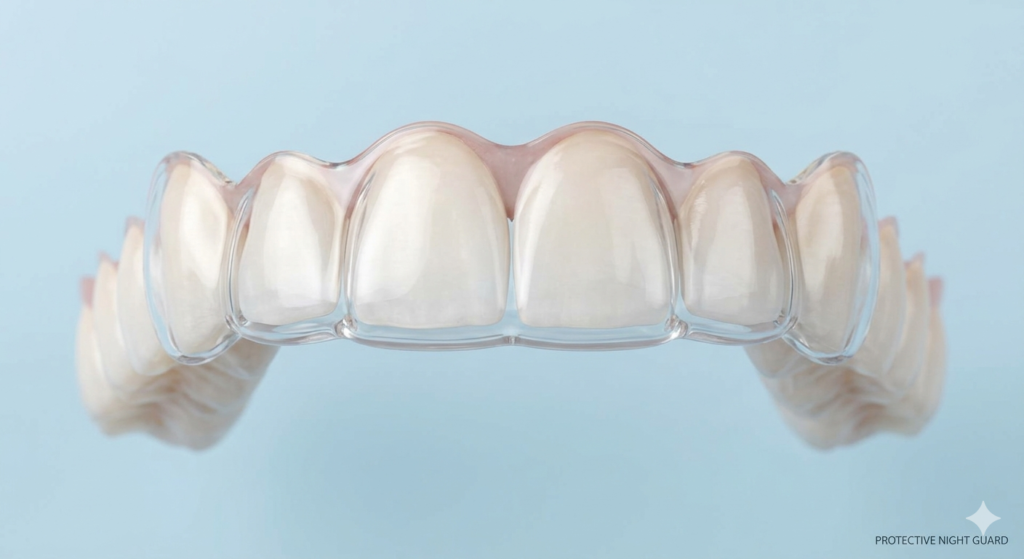
A night guard- is a flexible custom-fitted dental appliance worn over the upper or lower teeth during sleep. It creates a physical barrier between your upper and lower teeth, preventing direct enamel-on-enamel contact.
They do their job well for one specific thing, protecting tooth surfaces from wear. If you are grinding and your primary concern is saving your enamel, a good quality, dentist-fitted night guard is essential.
-A night guard- does not relax the jaw muscles. It does not reposition the TMJ. It does not address airway issues. It does not reduce the neurological signals driving the clenching. So while the teeth are protected, the muscles are still working overtime all night, and the joint is still under stress.
This is where most patients get stuck. They invest in a night guard, wear it faithfully for months, and still wake up with jaw soreness, morning headaches, ear pain, or a stiff neck. Sound familiar?
That is because TMJ-related bruxism has a mechanical and neurological component. The jaw joint itself may be inflamed, the disc inside the joint may be displaced, or the bite may be forcing the jaw into an unnatural position every time it closes. A night guard cannot correct any of these issues.
Clinical data suggests that around 60–70% of patients with Airway & TMJ disorder experience bruxism as a secondary symptom. In these cases, only cushioning the teeth with a nightguard without addressing the Airway & TMJ means the condition progresses silently, leading to joint degeneration, chronic facial pain, and in some cases, ear pain, headaches-migraines or tinnitus.
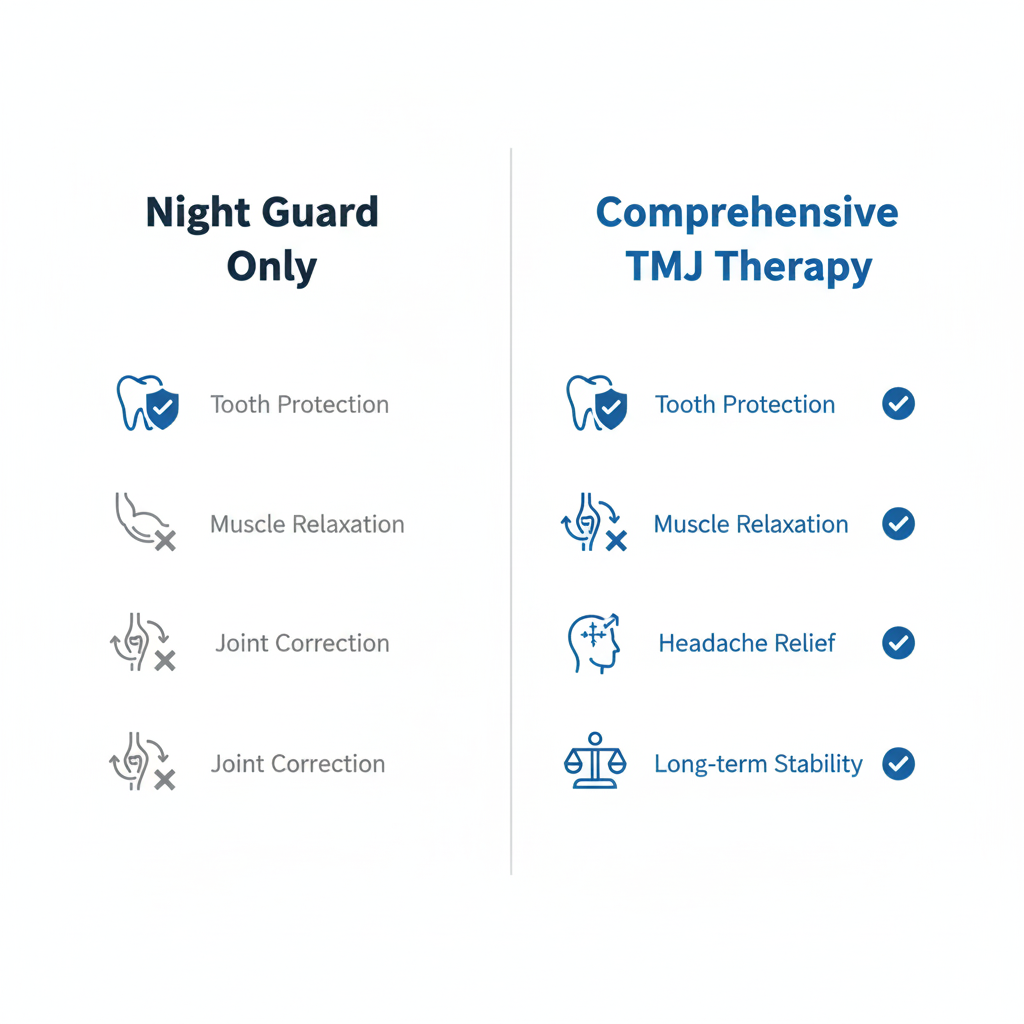
At Dr. Ankita Shah’s practice, treatment is never one-size-fits-all. A comprehensive approach typically involves:
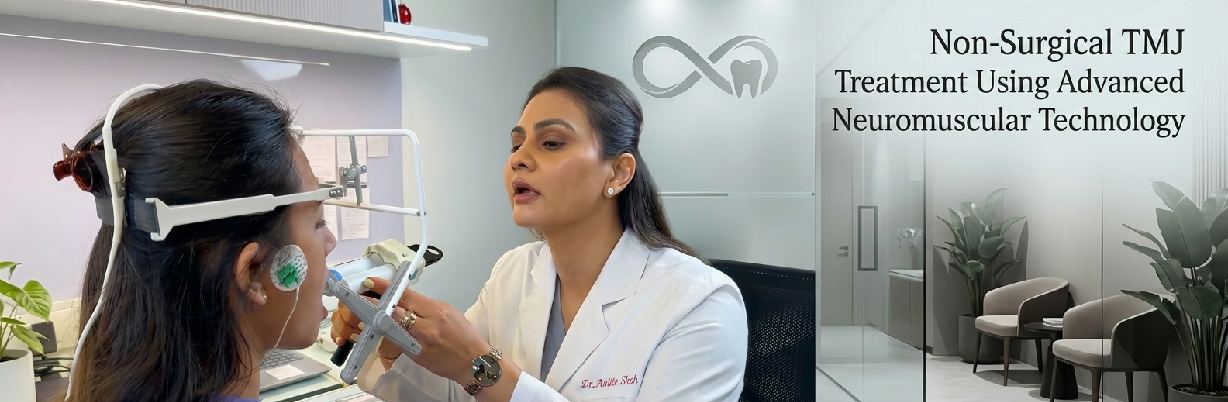
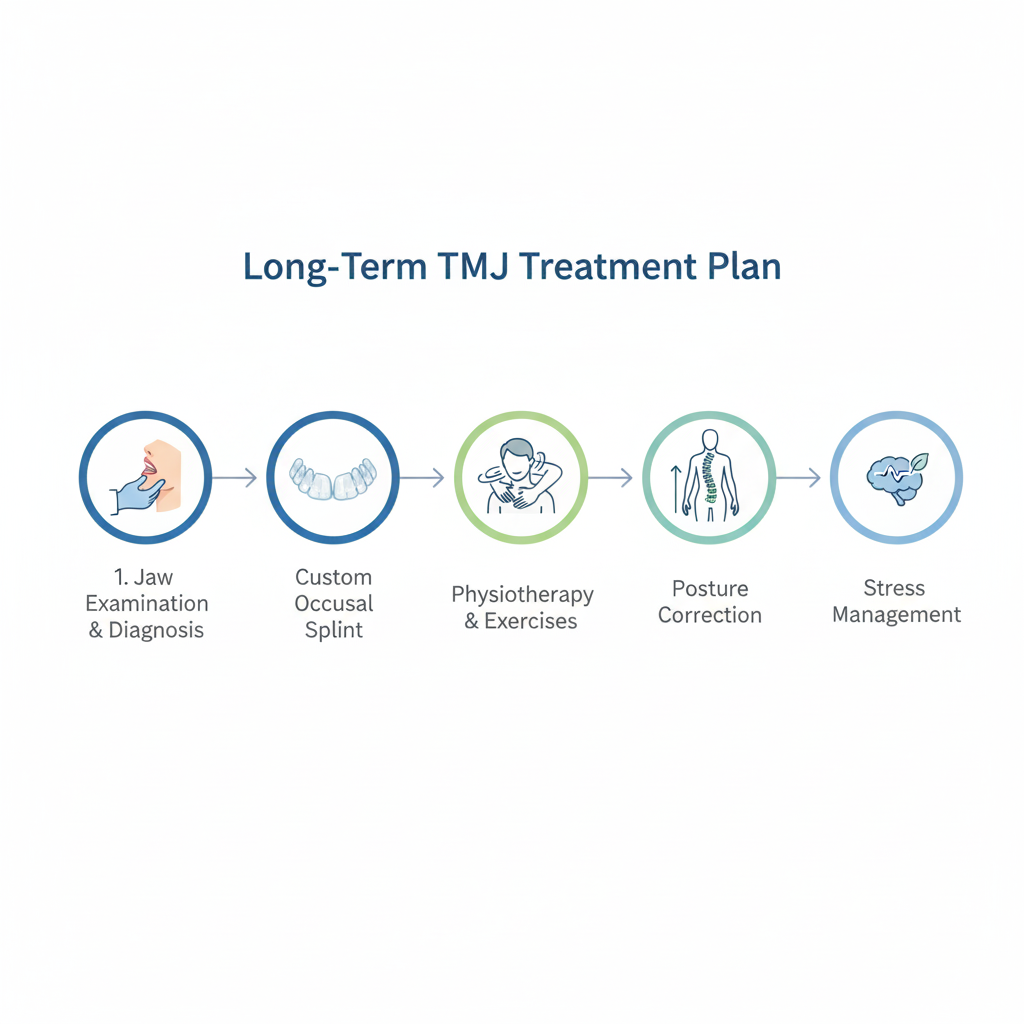
Step 1: Detailed TMJ Evaluation: This includes a clinical examination of jaw movement, muscle tenderness, joint sounds, and bite analysis. Imaging may be recommended to assess joint structure.
Step 2 : Identifying the Root Cause: Is it stress? A bite problem? A displaced disc? Sleep-disordered breathing? Each cause needs a different treatment path.
Step 3 :Muscle Relaxation and Joint Decompression: Physiotherapy, dry needling, or low-level laser therapy may be used to reduce muscle hyperactivity and joint inflammation.
Step 4: Occlusal Splint Therapy (Advanced): Unlike a standard night guard, a specifically designed occlusal splint/ GNM Orthotic is calibrated to decompress the TMJ and guide the jaw into a therapeutic position.
Step 5: Bite Correction if Required: In some cases, minor bite adjustments, orthodontics, or restorations may be needed to eliminate the mechanical trigger.
Step 6: Stress and Lifestyle Management: Patients especially benefit from guidance on sleep hygiene, stress reduction, and postural correction ,since forward head posture directly impacts jaw muscle tension.
Step 7: Monitoring and Maintenance: TMJ treatment is not a one-visit fix. Progress is tracked, splints are adjusted, and therapy is modified as the joint heals.
A dentist can fit a night guard. But if you are experiencing any of the following, you need a TMJ specialist, not just a protective appliance:
Early evaluation saves time, money, and a significant amount of unnecessary pain.
Yes, in some cases. An ill-fitted or over-the-counter night guard can alter your bite and add strain to an already stressed TMJ. Always get a custom-fitted appliance evaluated by a TMJ specialist if you have joint symptoms.
If your grinding comes with jaw pain, clicking, headaches, or ear discomfort, there is a high likelihood of TMJ involvement. A clinical evaluation by a TMJ specialist is the only way to confirm this.
Not necessarily. When the root cause is identified and treated, whether it is bite misalignment, stress, or sleep apnea , bruxism often resolves significantly or stops entirely.
A night guard protects teeth from wear. An occlusal splint/GNM orthotic is a precision-calibrated device that repositions the jaw to decompress the TMJ and reduce muscle tension. Nightguard is flexible where as a GNM Orthotic is hard and is worn only on the lower jaw. They may look similar but serve very different clinical purposes.
Most patients experience significant relief within 6–12 weeks of starting comprehensive therapy. Full resolution depends on the severity of joint involvement and consistency with the treatment plan.
Stress is a major trigger for both bruxism and TMJ flare-ups. Stress causes muscle hyperactivity in the jaw, which overloads the joint over time. However, structural factors are almost always also present and need to be addressed.
Dr. Ankita Shah offers specialised TMJ evaluations in Mumbai. If you have been grinding your teeth and a night guard has not resolved your symptoms, a comprehensive TMJ consultation is the recommended next step.
Copyright ©2025 TMJ, Tongue Tie and Sleep Institute. All Rights Reserved.
WhatsApp us
Let Us Know How Can We Help You!
At our institute, we take pride in providing complete care for issues related to tongue tie and TMJ. To enhance your quality of life, we treat a range of ailments with state-of-the-art technology and expert care. If you’re searching for an effective tongue-tie operation option or a TMJ specialist in India, you have arrived at the right place.
A tongue tie operation or tongue tie surgery is a life-changing procedure that not only restores tongue mobility but also has a full body effect. While most people associate tongue tie with breastfeeding difficulties in infants, it can also affect speech, breathing, posture, dental health, and sleep patterns in older children and adults. By undergoing this minimally invasive fascia release procedure, patients often experience immediate improvements in functionality and overall well-being.
For individuals considering tongue tie surgery, the benefits are far-reaching:
The Temporomandibular Joint (TMJ) that is your Jaw Joint has a significant impact on one’s quality of life, as they leave the person feeling exhausted and irritable. It not only affects essential functions like chewing, speaking, yawning but also affects one’s posture, breathing and sleep. As a leading TMJ specialist in Mumbai, we offer comprehensive diagnostics and personalized treatment plans to address your unique needs.
Our approach to TMJ disorders combines state-of-the-art technology with evidence-based practices. We specialize in:
Many patients are unaware that tongue tie and TMJ disorders can also be interconnected. A restricted tongue can lead to compensatory behaviors that strain the jaw, progressing towards TMJ issues.
For newborns, a tongue tie operation is critical in supporting breastfeeding. Infants struggling to latch or feed effectively benefit greatly from a quick and safe procedure.
Adults often seek tongue tie operations for relief from symptoms such as speech impediments, TMJ pain, or even snoring. Combining tongue tie surgery with myofunctional therapy ensures optimal results.
An integral part of our treatment protocols is myofunctional therapy. Exercises used in this therapy help to strengthen and coordinate the muscles of the tongue and face. Whether you’re undergoing a tongue tie operation or being treated for TMJ issues, myofunctional therapy plays a pivotal role in ensuring lasting outcomes. Expertise and complete treatment are essential for treating TMJ issues or tongue tie. Whether you’re searching for the best tongue tie surgery options or a trusted TMJ specialist in Mumbai, we ensure personalized care and transformative results. Don’t let these conditions stop you—reach out to us today to book your consultation and start your journey toward better health and wellness.