





If you’re experiencing jaw pain, clicking sounds, or difficulty chewing, you might be wondering: “Will I need surgery?” The short answer is no. In fact, the vast majority of people with TMJ pain can find relief without ever going under the knife.
As a TMJ specialist in Mumbai, one of the most common concerns I hear from patients is fear that their jaw pain means inevitable surgery. I’m here to tell you that’s a misconception. Modern TMJ pain treatment has evolved significantly, offering numerous effective alternatives that can resolve your symptoms and restore your quality of life.
Before exploring treatment options, let’s understand what’s happening in your jaw. TMJ pain refers to discomfort in the temporomandibular joint, the hinge connecting your jawbone to your skull. This joint works every time you chew, speak, swallow, or yawn.
Common TMJ pain symptoms include:
These symptoms can significantly impact daily activities, affecting your eating habits, communication, and sleep quality. However, experiencing these symptoms doesn’t automatically mean you need surgery.
Surgery is reserved for specific, severe cases where conservative treatments have failed. Let’s be clear: surgery is the last resort, not the first step.
Surgical intervention may be considered when:
Common TMJ surgeries include:
Arthrocentesis: A minimally invasive procedure where fluid is flushed through the joint space.
Arthroscopy: A surgeon uses a small camera to view the joint and make repairs through tiny incisions.
Open Joint Surgery (Arthroplasty): Used for severe structural problems, involving larger incisions and longer recovery.
Recovery from surgery typically takes 2-6 months, and while success rates range from 70-90%, there are risks including infection, nerve damage, and ongoing pain.
Here’s the good news: research shows that 80-90% of people with TMJ disorders improve significantly with non-surgical treatment. Let’s explore these proven alternatives.
1. Physical Therapy and Jaw Exercises
One of the most effective non-surgical TMJ treatment approaches involves targeted exercises that strengthen supporting muscles and improve joint mobility.
Beneficial exercises include:
2. Myofunctional Therapy
Myofunctional therapy retrains the muscles around your mouth and jaw to function optimally. This therapy addresses improper tongue posture, mouth breathing, and muscle imbalances, all contributing factors to TMJ pain.
Sessions typically involve:
3. GNM Orthotics
Custom-fitted GNM orthotics guards or bite splints are among the most popular TMJ surgery alternatives. These devices:
Unlike over-the-counter options, custom appliances are precisely fitted to your bite and jaw position for maximum effectiveness.
4. Stress Management and Relaxation Techniques
Since stress and anxiety trigger jaw clenching, managing stress is crucial TMJ pain treatment:
Studies show that stress management alone can reduce TMJ symptoms by 30-40% in many patients.
5. Heat and Cold Therapy
Simple home remedies provide significant relief:
Warm compresses relax tense muscles and improve circulation—apply for 15-20 minutes several times daily.
Cold therapy reduces inflammation and numbs pain—use ice packs for acute flare-ups, limiting application to 15 minutes.
6. Dietary Modifications
What you eat directly affects your jaw pain relief:
| Factor | Non-Surgical Treatment | Surgical Treatment |
| Success Rate | 80-90% | 70-90% |
| Time to Improvement | 4-12 weeks | 2-6 months recovery |
| Cost | Moderate | High |
| Invasiveness | Non-invasive | Invasive |
| Risk Level | Minimal | Moderate to High |
| Recovery Time | Immediate | Extended |
| Long-term Results | Durable | Variable |
| Number of Patients Using | Vast majority | Small percentage |
Implementing these strategies immediately can provide relief while pursuing professional treatment:
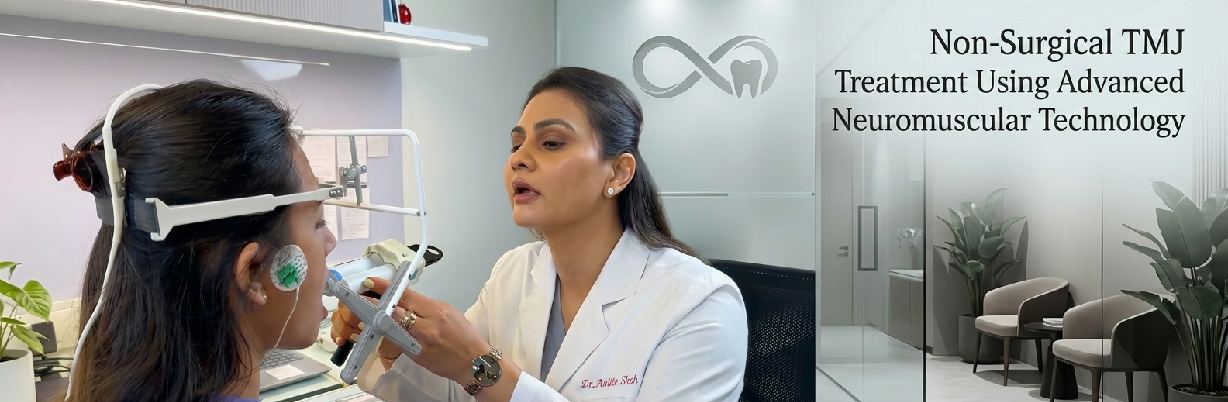
While many TMJ pain treatment strategies can be self-implemented, professional guidance optimizes results. A TMJ specialist in Mumbai provides:
Dr. Ankita Shah’s comprehensive approach considers your complete health profile, lifestyle factors, and personal goals to create effective non-surgical TMJ treatment plans.
With proper diagnosis and comprehensive non-surgical approaches, the overwhelming majority of people find lasting relief.
Whether you need jaw pain relief through exercises, myofunctional therapy, custom oral appliances, or stress management, effective options exist. The key is starting early, being consistent with treatment, and working with a qualified professional.
Schedule a consultation with a TMJ specialist in Mumbai today to explore personalized treatment options that work for your unique situation. Your journey to lasting relief starts here.
No, absolutely not. In fact, 80-90% of TMJ pain cases improve significantly with non-surgical treatment. Surgery is reserved for severe cases where conservative approaches haven't worked after 6+ months of consistent therapy. Most people find relief through exercises, myofunctional therapy, oral appliances, stress management, and lifestyle modifications. A qualified TMJ specialist in Mumbai can determine whether surgery is truly necessary in your case.
The most effective non-surgical TMJ treatment varies by individual, but research shows combining multiple approaches works best. Physical therapy and myofunctional therapy have success rates of 70-85%, while custom oral appliances prevent grinding and clenching. Stress management and jaw exercises contribute significantly. Most patients benefit most from a comprehensive approach addressing their specific jaw pain causes—whether that's muscle dysfunction, stress, poor posture, or joint inflammation.
Many patients notice initial improvement within 2-4 weeks of starting consistent TMJ pain treatment. Significant improvement typically occurs within 4-12 weeks. However, complete resolution may take 3-6 months depending on symptom severity, consistency with exercises, and which treatments you're using. The key is patience and consistency—healing takes time, but most people achieve lasting results without surgery.
Yes, TMJ exercises are highly effective components of TMJ pain treatment. Targeted exercises strengthen supporting muscles, improve joint mobility, and promote healing. However, exercises alone work best when combined with other approaches like stress management and oral appliances. A physical therapist or TMJ specialist in Mumbai can ensure you're performing exercises correctly—improper technique can worsen symptoms.
If non-surgical approaches haven't provided relief after 6+ months of consistent, comprehensive treatment, surgery may be considered. However, ensure you've truly pursued all non-surgical options, including myofunctional therapy, physical therapy, stress management, and custom oral appliances. Some patients need adjustments to their treatment plan rather than surgery. Consult an experienced TMJ specialist in Mumbai to explore whether additional non-surgical options exist before considering surgery.
Many people find relief through home management strategies including exercises, heat therapy, stress reduction, dietary modifications, and posture correction. However, professional guidance optimizes results by ensuring proper diagnosis, appropriate exercise technique, and personalized treatment planning. A TMJ specialist in Mumbai can assess your specific condition and guide you toward the most effective home management strategies combined with professional care when needed.
TMJ surgery does involve pain during recovery, though pain management medications help. Recovery time varies by surgery type: arthrocentesis (minimal invasive) requires 1-2 weeks, arthroscopy (minimally invasive) takes 2-4 weeks, and open joint surgery requires 2-6 months. Beyond physical recovery, some patients experience ongoing pain despite surgery. This is why non-surgical TMJ pain treatment alternatives are tried first—they avoid surgical risks with 80-90% success rates.
WhatsApp us
Let Us Know How Can We Help You!
At our institute, we take pride in providing complete care for issues related to tongue tie and TMJ. To enhance your quality of life, we treat a range of ailments with state-of-the-art technology and expert care. If you’re searching for an effective tongue-tie operation option or a TMJ specialist in India, you have arrived at the right place.
A tongue tie operation or tongue tie surgery is a life-changing procedure that not only restores tongue mobility but also has a full body effect. While most people associate tongue tie with breastfeeding difficulties in infants, it can also affect speech, breathing, posture, dental health, and sleep patterns in older children and adults. By undergoing this minimally invasive fascia release procedure, patients often experience immediate improvements in functionality and overall well-being.
For individuals considering tongue tie surgery, the benefits are far-reaching:
The Temporomandibular Joint (TMJ) that is your Jaw Joint has a significant impact on one’s quality of life, as they leave the person feeling exhausted and irritable. It not only affects essential functions like chewing, speaking, yawning but also affects one’s posture, breathing and sleep. As a leading TMJ specialist in Mumbai, we offer comprehensive diagnostics and personalized treatment plans to address your unique needs.
Our approach to TMJ disorders combines state-of-the-art technology with evidence-based practices. We specialize in:
Many patients are unaware that tongue tie and TMJ disorders can also be interconnected. A restricted tongue can lead to compensatory behaviors that strain the jaw, progressing towards TMJ issues.
For newborns, a tongue tie operation is critical in supporting breastfeeding. Infants struggling to latch or feed effectively benefit greatly from a quick and safe procedure.
Adults often seek tongue tie operations for relief from symptoms such as speech impediments, TMJ pain, or even snoring. Combining tongue tie surgery with myofunctional therapy ensures optimal results.
An integral part of our treatment protocols is myofunctional therapy. Exercises used in this therapy help to strengthen and coordinate the muscles of the tongue and face. Whether you’re undergoing a tongue tie operation or being treated for TMJ issues, myofunctional therapy plays a pivotal role in ensuring lasting outcomes. Expertise and complete treatment are essential for treating TMJ issues or tongue tie. Whether you’re searching for the best tongue tie surgery options or a trusted TMJ specialist in Mumbai, we ensure personalized care and transformative results. Don’t let these conditions stop you—reach out to us today to book your consultation and start your journey toward better health and wellness.