




Teeth Grinding and Clenching
“Teeth Grinding Treatment/ Jaw Clenching Relief”
Dental Night
Guard India
What is Teeth Grinding and Clenching?
Teeth grinding and clenching, also known as Bruxism, is a condition involving involuntary holding the teeth together and tightening the jaw muscles or rubbing the teeth on each other through the day or during sleep, that can lead to severe discomfort and dental problems, such as wearing out of tooth enamel, chipped or loose teeth, etc.
In some cases, the patient may not may not realize they are grinding their teeth. If you have bruxism, you may experience the following symptoms,
- Jaw pain
- Jaw locking
- Sore jaw muscles
- Pain in the face and neck
- Toothache or sensitivity
- Migraines
- Tension headaches
- Irregular or disrupted sleep patterns
- Slow eating/ pain while eating
- Ear pain
- Loose teeth
- TMJ that sounds like popping or clicking in the jaw
- Chipped teeth
- Dull pain that begins in the temples
- Neck stiffness
- Injury resulting from biting or chewing on the inside of the cheek
Causes of Teeth Grinding and Clenching
- Poor hip alignment
- Poor neck alignment
- Incorrect teeth alignment
- Tongue tie
- Nasal obstructions & Deviated septum
- Stress & Anxiety
- Snoring & Sleep Apnea
- Having parasitic diseases such as worms in children
- Magnesium deficiency
It is important to diagnose the exact cause of teeth grinding and clenching to prepare the right teeth-grinding treatment plan. Get in touch with our TMJ neuromuscular dentist to learn more.
Neuromuscular treatment approach
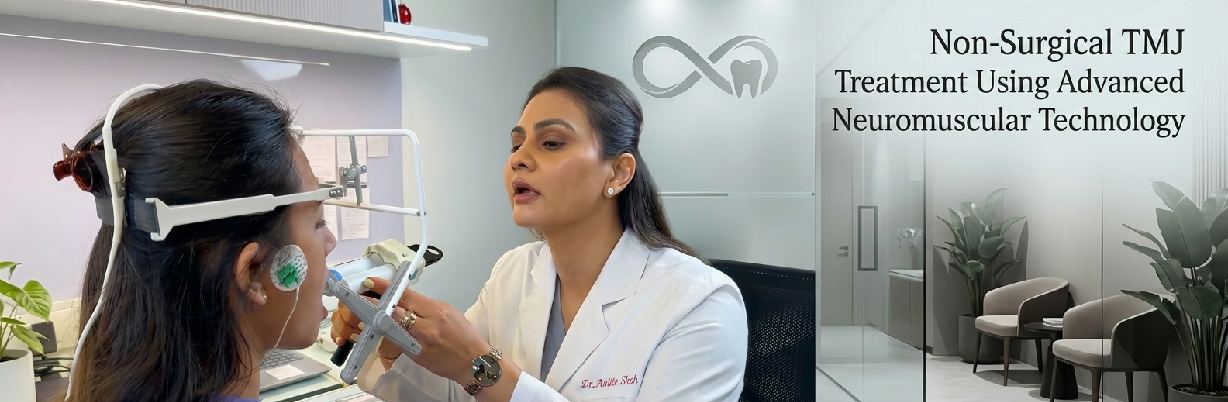
A Neuromuscular dentist is a TMJ specialist who provides the right and balanced bite to stabilize your TMJ and body posture. Dr. Ankita Shah is the first and only Gnatho neuromuscular dentist in India. She is internationally trained and has years of experience in neuromuscular dentistry and TMJ.
Treatment approaches for Teeth Grinding and Clenching
- A GNM orthotic is the one that has been proven most successful as it simulates the natural structure of the jaw and teeth and balances the body posture.
- A Neuromuscular(NM) Orthotic often fails because of the bite's position and the orthotic's design.
- Teeth are meant to occlude and fit into each other. A Flat Plane Splint can never achieve that and hence often fails
- An NTI splint only sits on the front teeth, and back teeth do not occlude, so neck and shoulder pain and stiffness increase afterward.
- A dental bite or night guard for teeth is often flexible andacts like a cushion to protect your teeth from wear. It doesn't stop or resolve the symptoms of teeth grinding & clenching. Night guard for TMJ pain is only beneficial for patients who are not looking for a permanent solution for TMJ pain.
2) Posture Correction: Clenching often arises from the lower sacral pelvic region, causing the long back and neck muscles to strain, thereby affecting the head and lower jaw posture. In certain instances, addressing misalignment of the head, neck, hip, or spine through posture correction can help improve the problem of teeth clenching and grinding.
Dr. Shah is
Laser Certified
(GLOH), LLC to perform laser
frenectomies.
Frequently Asked Questions
You can prevent teeth clenching and grinding by correcting your TMJ alignment with TMJ orthotics or splints like Gnatho Neuromuscular Orthotics. You may also want to consider correcting your posture, performing jaw exercises and managing your stress and anxiety.
You can tell if you are grinding and clenching your teeth at night by looking for certain symptoms of night bruxism like jaw pain, stiff neck and shoulders in the mornings, headaches, disrupted sleep, face and neck pain, highly sensitive teeth, TMJ discomfort, ear pain, etc.
Yes, teeth clenching and grinding are common in children. It is often because of a tongue tie, magnesium deficiency, worms, incorrect bite, sleep disordered breathing or a poor pelvic and neck alignment.
When your neck is not aligned properly, it can result in muscle tension in the neck and the jaw. This misalignment of the neck will also force the lower jaw muscles to exert more effort to support the head and uphold balance, which in turn will lead to the clenching and grinding of the teeth.
Sleep bruxism is a condition where the patient grinds and clenches their teeth while sleeping. Many individuals with night bruxism are not aware of the problem and, hence, do not seek timely medical intervention.
OUR NON-INVASIVE SOLUTIONS FOR TMJ DISORDER & JAW PAIN:
Blogs
TMJ Pain in Athletes: Causes, Treatment & Night Guard Benefits
By Dr. Ankita Shah verified expert in TMJ Share this Article Athletes and fitness enthusiasts push their bodies hard. This also places significant strain on the jaw. Clenching during lifting, impact to the face in contact sports, long hours of training, forward-head posture, and high stress can overload the temporomandibular joint (TMJ). When this joint […]
Can Tonsil and Adenoid Removal Affect a Child’s Immunity?
By Dr. Ankita Shah verified expert in TMJ Share this Article Tonsil and adenoid removal does not weaken a child’s long-term immunity. When these tissues are enlarged or infected, removing them can actually enhance breathing, improve sleep patterns, and support better overall well-being. What Function Do Tonsils and Adenoids Serve in a Child’s Immune System? […]

Sleep Apnea and TMJ: The Nighttime Jaw-Grinding Cycle Explained
By Dr. Ankita Shah verified expert in TMJ Share this Article Jaw grinding during sleep is often a protective response to breathing obstruction caused by sleep apnea, where the body uses jaw movement to reopen the airway. This repeated activation can lead to muscle strain, clenching, and eventually TMJ-related symptoms if not addressed properly. Why […]

Do Wisdom Tooth Extractions Cause TMJ?
By Dr. Ankita Shah verified expert in TMJ Share this Article Wisdom tooth extraction does not directly cause TMJ disorders. Some patients may experience temporary jaw discomfort due to muscle strain during the procedure, but this typically resolves within a few days to weeks and does not lead to long-term joint problems. Wisdom tooth extraction […]

How Missing Teeth Affect Jaw, Posture, and Airway
By Dr. Ankita Shah verified expert in TMJ Share this Article Missing teeth can gradually change your bite height, affecting how your jaw functions and how muscles work. Over time, this may influence posture patterns and even breathing space in certain cases. Early evaluation helps maintain balance and prevent Meta Title -Missing Teeth & TMJ […]

GNM Sleep Appliance: Fix TMJ, Snoring, and Sleep Apnea Holistically
By Dr. Ankita Shah verified expert in TMJ Share this Article If you are reading this, chances are you or someone you love is struggling with a restless night. Maybe your partner has nudged you for the hundredth time asking you to “please stop snoring.” Perhaps you wake up every morning with a dull headache, […]
Tonsils, Adenoids, and Airway Orthodontics: Unlocking Better Breathing in Kids
By Dr. Ankita Shah verified expert in TMJ Share this Article As a TMJ and airway specialist in Mumbai, one of the most common concerns parents bring to me is this: “My child is always tired, snores at night, or breathes through the mouth, is something wrong?” My answer is almost always the same: yes, […]
Premolar Extractions in Braces: Do They Cause TMJ Problems?
By Dr. Ankita Shah verified expert in TMJ Share this Article Orthodontic treatment has evolved significantly over the years, yet one topic continues to raise questions among patients and clinicians alike — premolar extraction braces. Many individuals undergoing braces are advised to remove premolars to create space for alignment. But an important concern often follows: […]
TMJ Pain After Braces? Why Orthodontics Can Trigger Jaw Disorders
By Dr. Ankita Shah verified expert in TMJ Share this Article Orthodontic treatment is often associated with straight teeth and a confident smile. However, some patients report unexpected symptoms after completing braces—jaw discomfort, clicking sounds, headaches, or even difficulty chewing. This raises an important clinical question: can braces contribute to jaw joint problems? The answer […]
Is a Night Guard Enough for Teeth Grinding Treatment?
By Dr. Ankita Shah verified expert in TMJ Share this Article A night guard is like a cushion that protects your teeth from grinding damage but does not treat the root cause of bruxism. If your grinding is linked to TMJ disorder, stress, sleep apnea, or jaw misalignment, a night guard alone will not stop […]